

Web Content Viewer
Actions
buscador
Actions
Web Content Viewer
Actions
Integrated Territorial Management Strategy
May 25, 2026
Ecopetrol Group's Integral Management Strategy for the Territory
Click here to learn about the Integral Management Strategy for the Territory (GEE-N-001)
The Integral Management Strategy for the Territory aims to contribute to territorial development and business sustainability across the value chain of each business line of the Ecopetrol Group by building trust-based relationships with stakeholders in the territories and by executing investments to generate shared prosperity, all within a framework of security, and respect for and promotion of human rights. This general objective is structured through an ordered set of activities grouped into three mission components and three transversal components.
The strategy is implemented through the following mission components:
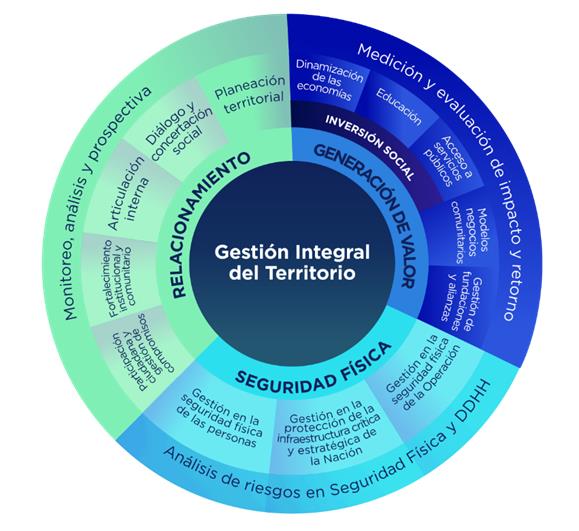
- Relationships with communities, the State, civil society, and cooperation organizations: build and consolidate trust-based relationships grounded in respect for life and other fundamental rights, and in ongoing social dialogue, to agree on shared visions of the territory and to seek comprehensive solutions to the factors driving territorial conflict.
- Generating social value: contribute to territorial development through strategic, relevant, and impactful investment that promotes sustainability, inclusion, and territorial peace across the value chain, in line with the commitments agreed on by the local, regional, and national government and the Sustainable Development Goals (SDGs); as well as through the management of alliances and the identification of business models that involve community participation.
- Physical security with a human rights approach: manage the security of people, infrastructure, and operations within a corporate human rights due diligence framework.
The three (3) components are transversal across financial and administrative planning, risk management, and continuous improvement and excellence, and are articulated through an operating model for territorial management, composed of processes and sub-processes.
Figure 1
Components of the Integral Management Strategy for the Territory
This strategy, in turn, has cross-cutting approaches, understood as integrating guidelines present in the three (3) components:
- Just Energy Transition: addresses the proactive management of the territory, considering socio-labor reconversion, sustainable alternatives for oil-producing territories, and the democratization of energy resources and their management within an associative framework, in line with the challenges of climate change and commitments to reduce greenhouse gas emissions.
- Diversity and Inclusion: commitment to equity and non-discrimination, recognizing and respecting diversity in all its forms, and fostering collective awareness of the value of difference in achieving peace and reconciliation.
- Innovation and Technology: addresses the Integral territory management from an innovation perspective, understood as the ability to create and disseminate new rules and practices that strengthen a mentality for change and generate effective, sustainable solutions to problems, adding value to communities, with the support of technology.
- RELATIONSHIPS WITH COMMUNITIES, THE STATE, CIVIL SOCIETY, AND COOPERATION ORGANIZATIONS
This component includes six (6) subcomponents
Dialogue and social agreements: The social dialogue approach involves stakeholders in the territory, fostering dynamic, diverse, broad, and democratic processes. Ecopetrol seeks to engage with and coexist in the territories through collective construction, understanding of the territorial reality, and the prevention, attention, resolution, and transformation of conflict, thereby strengthening relationships with communities and local actors and positively articulating sustainable business and territorial development.
Social dialogue processes aim to strengthen the following scopes:
- Trust-building: these are spaces for coming together, mutual recognition, and the exchange of ideas on issues of common interest, which can lead to agreement on a future agenda for dialogue.
- Shared vision for the development of the territory: spaces to build consensus around the territory's common aspirations and objectives for sustainable development, and to align efforts and resources among the participating stakeholders.
- Conflict transformation: these are spaces convened to identify, prevent, resolve, and transform conflicts that may be observed or arise between Ecopetrol, the Group's companies, and the territory's social actors.
Social dialogue must take place within the framework of respect for and fostering of legality and human rights, transparency and good faith, active listening and recognition, reciprocity, solidarity, and responsibility in democratic, plural, and inclusive spaces.
Civil participation and commitment management: Civil participation is a fundamental right that underpins Colombian democracy and is one of the purposes of the State (Articles 2 and 40 of the Political Constitution of Colombia). It grants all citizens the opportunity to participate and actively engage in the oversight of public management.
To maintain trust-based relationships with stakeholders, Ecopetrol must identify, acknowledge, and fulfill past commitments in the regions where it operates. Accordingly, these commitments must be managed until they are fulfilled. Commitment management ensures compliance with commitments arising from Ecopetrol's interactions with its stakeholders. This includes registering, monitoring, and fulfilling commitments established in responses to Requests, Complaints, Claims, and Suggestions (PQRS for its acronym in Spanish), as well as those agreed upon in relationship scenarios. This management is governed by the procedure for managing commitments with stakeholders.
Internal cooperation: To contribute in an articulated way to the Integral territory management, actions are developed within the Ecopetrol Group companies, as well as between transversal areas, business lines, and segments, which seek to establish dialogues and processes to align actions in the territories and nurture the principle of strategic planning from a multidisciplinary vision, ensuring the particularities and mission objectives of each business line. Similarly, Ecopetrol has strengthened relationships and articulated work with contractors, trade associations, subordinates, subsidiaries, and partners to improve its management in the territory.
Strengthening of institutions and the community: Ecopetrol invests in relationships, translating them into actions that strengthen institutions and the community and enable the presence of suitable and trained stakeholders to take on the challenges of transforming their territories.
Territorial planning: To carry out planning in the territory, Ecopetrol develops comprehensive land management plans aligned with the operational plans for projects and assets, based on territorial characterizations.
Monitoring, analysis, and forward planning: Through the Coordination of Territorial Monitoring and Analysis, the description, understanding, reflection, analysis, and forward planning of the dynamics that occur in the environment and in the territory where the Ecopetrol Group operates are carried out, thus enabling planning, prevention, informed decision-making, and the resolution of conflicts that may affect business activity.
2.GENERATING SOCIAL VALUE
The Ecopetrol Group recognizes that the development and growth of its value chain have contributed to the creation of social value, materialized in the growth, development, and transformation of the regions, in partnership with national and local authorities and various allies, to advance sustainability, inclusion, territorial peace, and the quality of life of people. This contribution, in the long term, allows us to consolidate high levels of trust.
The criteria that guide the materialization of the Ecopetrol Group's contribution to the country's territorial development include: i) contributing to development and to the future vision shared with the different stakeholders in the territories, ii) generating efforts primarily focused on the country's rural areas to help close gaps, iii) ensuring that contributions align with the transversal approaches contained in this strategy, and iv) constructing and planning through participatory planning processes and social dialogue.
The Group is committed to the 2030 Agenda and, in this, to the Sustainable Development Goals (SDGs) of the United Nations. It recognizes the comprehensiveness and interdependence of all the SDGs and, for this reason, although there are some on which it has the greatest impact, it treats them as a complete and cohesive agenda.
Figure 2
Sustainable Development Goals
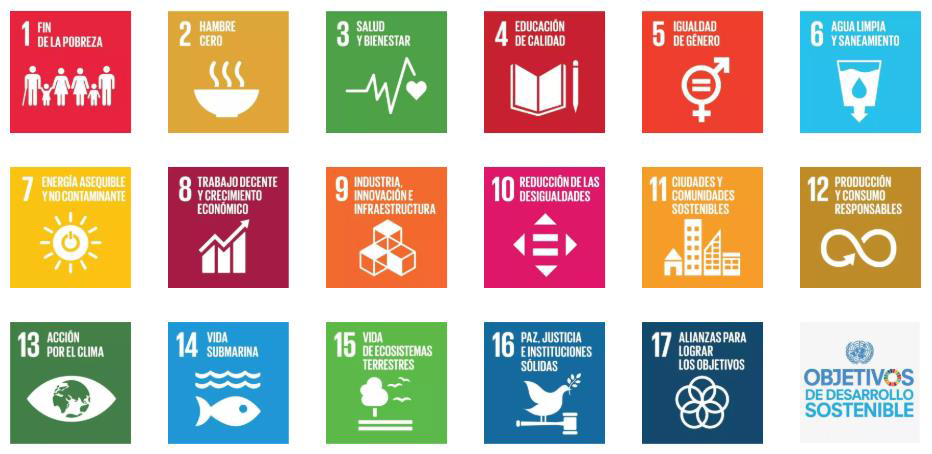
Note. UNDP, 2016
The Ecopetrol Group's contribution to the generation of social value is realized through social investment for territorial development, planned, structured, and executed through a portfolio of investments, as well as through community business models and partnerships for the development and management of business foundations. The social value generated is measured, evaluated, fostered, and communicated on an ongoing basis.
Social investment for sustainable territorial development
Social investment is the set of human, material, and financial resources aimed at developing projects that generate a positive social impact on the quality of life, reduce inequalities, and promote the social well-being of citizens.1
At Ecopetrol S.A., social investment is the business practice that, in accordance with the bylaws, allows contributions to be made within the framework of the Integral Management Strategy for the Territory to: i) contribute to business viability, consolidation, and sustainability while advancing sustainable development in the territories where the company operates, and ii) contribute to closing gaps in regions of the country outside the area of operation, where such contributions are aligned with the business strategy.
Social investment is materialized through projects that are identified, agreed upon, and prioritized in spaces of social dialogue with the actors of the territory, in accordance with shared visions and agendas that enable the coordination and articulation of efforts around the defined collective purposes. In this sense, initiatives and projects must be identified under the aforementioned guiding criteria, and formulated, structured, and executed in accordance with planning standards, institutional competencies, technical rigor, and implementation of risk management and controls. The generation of social value focuses on three (3) objectives, called strategic options:
a. Dynamization of local economies
Contribute to the diversification and dynamization of local economies and to the promotion of productive employment, by strengthening the belief in the territories and capacities of the various sectors of the economy, with special emphasis on the rural, community, and popular economy, and by encouraging inclusive rural development, promoting entrepreneurship, and consolidating micro, small, and medium-sized enterprises; green businesses; and social innovation initiatives through capacity building, as well as by strengthening road and community infrastructure to encourage commerce, connectivity, and rural and urban social cohesion.
b. Education
Develop interventions that improve school quality, coverage, and retention as a priority, with a focus on the areas of interest of the Ecopetrol Group, and through them generate social capital and transmit democratic culture and values. Likewise, it is necessary to promote the training of work skills, with the premise of adapting skills to the challenges of the energy transition.
c. Closing gaps in access to public utilities
Have the technical, scientific, and technological capacity to promote access to basic utilities, such as natural gas, energy, and drinking water and sanitation, thereby advancing the justice of the energy transition, while understanding business purposes and objectives and focusing on the territories with the greatest gaps. In the same way, recognizing that contributions to the full exercise of rights promote the quality of life and well-being of the population, the Ecopetrol Group encourages access to health services and actions that promote them, thereby creating conditions for the effective enjoyment of rights.
3. PHYSICAL SAFETY WITH A HUMAN RIGHTS APPROACH
The Ecopetrol Group defines the Enabling Plan as an instrument for implementing a preventive and anticipatory model for the management of the safety of people, infrastructure, and operations, with the cultural principle "Life First" at the center.
Figure 3
Enabling Plan for Physical Safety and Human Rights
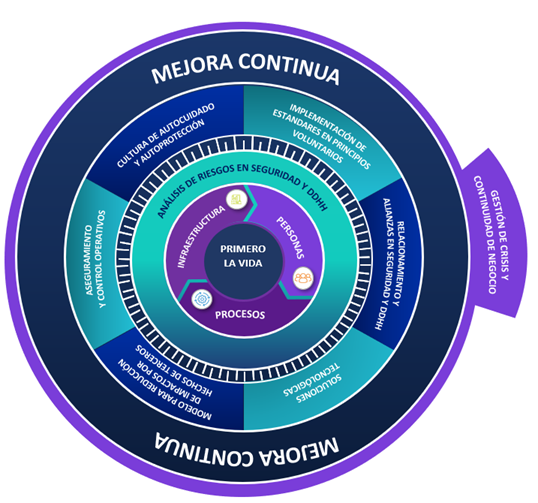
The pillars that support the management of the plan are:
- Management for the protection of people: define and implement a physical safety model focused on protecting the lives of employees during the performance of their functions.
- Management for the protection of the Nation's critical and strategic infrastructure: define and implement cost-effective solutions and remove barriers to achieving self-protection, thereby preventing and/or reducing safety impacts on the territory, people, and operations. Management for the protection of the Nation's critical and strategic infrastructure is fundamental, since these assets guarantee the country's supply, provide essential public utilities, and constitute the fundamental pillar of energy security.
- Management for the viability of the operation: to enable the development of the company's operations, projects, and new businesses that support the energy transition, the well-being of communities, and the provision of essential public utilities to all Colombians.
Mission Components
The decisive, inclusive, and permanent relationship with stakeholders: Communities, the State, Civil society, and Cooperation organizations, allows for the construction of constructive long-term relationships, the agreement on shared visions of the territory, local development agendas, and the transformation of conflict.
This component proposes strengthening democratic, participatory, inclusive, proactive, and strategic communication spaces through social dialogue and timely, transparent access to information, promoting initiatives that transform the territory, while adhering to principles of social innovation and incorporating technological tools in line with the company's TESG Strategy (known in Spanish as SosTecnibilidad®).
Likewise, this component is developed from the following subcomponents: i) dialogue and social agreements, ii) civil participation and commitment management, iii) internal cooperation, iv) strengthening of institutions and the community, v) territorial planning, and vi) monitoring, analysis, and forward planning.
Subcomponents
Dialogue and Social Agreements
According to the Integral Strategy for the Territory, social dialogue is the main tool for fostering relationships of trust, strengthening the social fabric, and building shared visions of the territory within a framework that respects and promotes human rights. For the Ecopetrol Group, social dialogue is understood as a concerted, democratic, and inclusive process conducted between the companies of the Ecopetrol Group and the social actors of the territory to build trust and manage diverse interests based on common objectives and shared visions for the territory. This approach allows problems to be addressed assertively and constructively, thereby contributing to the sustainable development of the territories where the Ecopetrol Group is present.
Social dialogue processes aim to strengthen the following scopes:
- Trust-building: these are spaces for coming together, mutual recognition, and the exchange of ideas on issues of common interest, which can lead to agreement on a future agenda for dialogue.
- Shared vision for the development of the territory: spaces to build consensus around the territory's common aspirations and objectives for sustainable development, and to align efforts and resources among the participating stakeholders.
- Conflict transformation: these are spaces convened to identify, prevent, resolve, and transform conflicts that may be observed or arise between Ecopetrol, the Group's companies, and the territory's social actors.
Social dialogue must take place within the framework of respect for and fostering of legality and human rights, transparency and good faith, active listening and recognition, reciprocity, solidarity, and responsibility in democratic, plural, and inclusive spaces.
Dialogue and social agreements fostered by Ecopetrol for the construction of trust-based relationships
In particular, during 2025, Ecopetrol conducted 17 dialogue processes with the purpose of transforming the territory by building trust, strengthening the social fabric, consolidating a culture of legality and respect, and promoting Human Rights, while articulating efforts focused on sustainable development and territorial peace, as well as strengthening cultural heritage and traditions, promoting sports, recreation, health, and pedagogy within the industry, advancing the energy transition, and strengthening regional cooperation, with the aim of making the company viable in the territory.
A summary by regional is presented in Table 1.
Table 1
Social Dialogue Processes by Regional (2025)
| Regional | Number of Dialogues | Number of Spaces |
|---|---|---|
| Central Andean | 1 | 5 |
| Central | 1 | 37 |
| Eastern | 3 | 15 |
| Orinoquia | 6 | 20 |
| Piedemonte | 2 | 8 |
| Caribbean | 4 | 13 |
| Total | 17 | 98 |
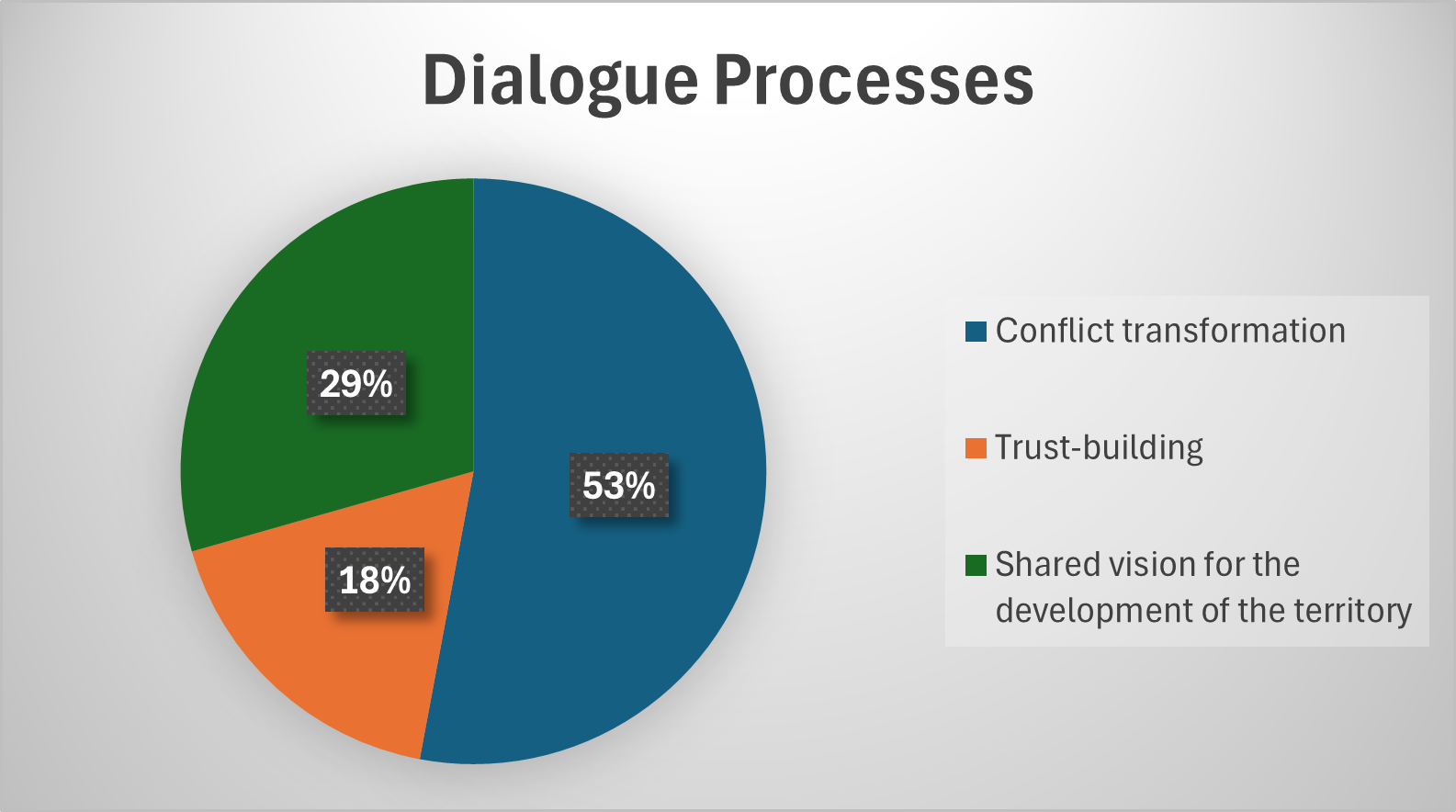
Figure 4
Social Dialogue Processes by Type
-
During the period under evaluation, 17 dialogue processes were managed, of which 16 were dialogues continuing cycles initiated in previous years, ensuring institutional memory, traceability, and the consolidation of agreements, and 1 began in 2025, with the following distribution:
- 53% oriented toward conflict transformation, focused on moving from adversarial dynamics to cooperative frameworks through causal analysis, dispute management, and the generation of sustainable arrangements; this reduces operational risks (blockages, litigation, delays), stabilizes the social environment, and, consequently, improves the viability of the business by reducing transaction and contingency costs
- 29% to a shared vision for the territory, articulating community expectations and public-private plans through common roadmaps (prioritization, goals, indicators, and sources of financing), enabling territorial transformation by aligning investments and social projects with local and sectoral development plans, and maximizing positive externalities and sustainability in the medium and long term
- 18% to building trust, prioritizing transparency, verifiable compliance, and permanent and open relationship channels; this reinforces social legitimacy, increases the predictability of the operation, and enables the execution of measures, which also positively impacts business continuity
The 17 dialogue processes were conducted in 98 spaces agreed upon with the participants, of which:
- 29 spaces resolved nonconformities by making the operation viable and anticipating new avenues, of which: 55% addressed issues related to hiring local labor, 28% addressed various commitments acquired by entities external to the Company, and 17% addressed issues related to contracting local goods and services.
- 33 spaces promoted active listening, strengthened dialogic capacities, and supported the energy transition, thereby contributing positively to the Company's relationship and image.
- 14 spaces resolved doubts and concerns regarding the operation's environmental impacts.
- 22 jointly agreed and followed up on the Company's voluntary social investment.
Table 2
Number of Participants by Social Dialogue Process and Regional (2025)
| Regional | Number of processes | Number of spaces per process | Average number of participants per space |
|---|---|---|---|
| Central Andean | 1 | 5 | 20 |
| Central | 1 | 37 | 17 |
| Eastern | 3 | 15 | 162 |
| Orinoquia | 6 | 20 | 24 |
| Piedemonte | 2 | 8 | 33 |
| Caribbean | 4 | 13 | 40 |
In the 98 spaces for dialogue, they actively and articulately participated to build new relationships and joint visions of the territory and the population living in Ecopetrol's area of influence, as follows:
- Community Action Board members participated in 41 spaces
- Community leaders participated in 30 dialogues, 13% of whom were female leaders in their territories.
- Ethnic community members participated in 16 spaces for dialogue, of which 68% were directed to indigenous peoples and 32% to Afro Community Councils and the Raizal population.
- Local entrepreneurs participated in 7 spaces
- Trade associations participated in 4 spaces.
Dialogue and Participation Initiatives
In 2025, the Dialogue and Relationship Department (GXN) designed and executed a triple-A territorial management strategy (Anticipation, Accompaniment, and Attention), implementing 61 Dialogue and Participation Initiatives across eight (8) areas nationwide. Pillars such as civil participation, social dialogue, legal compliance, and data analysis have enabled us to meet our obligations, proactively address alarms, and properly manage our incidents.
In this sense, during this period, we observed an objective and strategic territorial distribution of actions, as shown in Table #1: Dialogue and Participation Initiatives by Regional. At the national level, there were 22 initiatives (36.7%) across 8 regions, followed by Piedemonte with 10 (16.4%), Eastern with 8 (13.11%), South Pacific Andean with 6 (9.8%), Caribbean-Cartagena with 6 (9.8%), Orinoquía with 6 (9.8%), Central with 2 (3.28%), and Caribbean (La Guajira) with 1 (1.64%). These activities have strengthened relations with local, regional, and institutional stakeholders and fostered social dialogue as the main tool for addressing and managing conflicts in the territory.
Table 3
Dialogue and Participation Initiatives by Zone
| Area | # Initiatives | % Contribution |
|---|---|---|
| Nationwide | 22 | 36.07% |
| Piedemonte | 10 | 16.39% |
| Eastern | 8 | 13.11% |
| South Pacific Andean | 6 | 9.84% |
| Caribbean (Cartagena) | 6 | 9.84% |
| Orinoquía | 6 | 9.84% |
| Central | 2 | 3.28% |
| Caribbean (La Guajira) | 1 | 1.64% |
| Total | 61 | 100 % |
The relationship developed a consolidated, differential, and inclusive approach, strengthening cooperation between various stakeholders in the prioritized territories. In total, initiatives were implemented that prioritized the general community (39.3%) and ethnic groups (19.7%), complemented by actions targeting women, the LGBTIQ+ population, and young people (16.4%), as well as specific processes for children and young people (13.1%). Progress was also made in local governance through initiatives with Community Action Boards and local authorities (4.9% each). These interventions reflect a strategy aimed at social prevention, capacity building, and the consolidation of spaces for dialogue aligned with the guidelines of the Ecopetrol Group. In terms of scope, 1,009 people participated in the initiatives, of whom a majority were women (69.4%), strengthening equity and inclusion approaches. From a territorial standpoint, the Orinoquía Regional recorded the highest participation rate (39.6%), followed by South Andean-Huila (25.5%), Piedemonte (16.1%), and the other regions at smaller proportions. Together, these results demonstrate the institutional capacity to mobilize diverse actors, energize civic participation, and advance the collective construction of solutions through a preventive and inclusive approach.
Table 4
Stakeholder Approach Dialogue and Engagement Initiatives (2025)
| Target Stakeholder | Initiatives | Percentage |
|---|---|---|
| General community | 24 | 39.34% |
| Ethnic groups | 12 | 19.67% |
| Women, LGBTIQ+ Community and Children and Youth | 10 | 16.39% |
| Children and young people | 8 | 13.11% |
| Local authorities | 3 | 4.92% |
| Associations and Community Action Boards (JAC) | 3 | 4,92% |
| Women | 1 | 1.64% |
| Total | 61 | 100% |
Table 5
Stakeholder Participation in Dialogue and Participation Initiatives (2025)
| Area | a. Male | b. Female | c. LGBTIQ+ | e. I prefer not to answer | Other | Total |
|---|---|---|---|---|---|---|
| Southern Andean – Huila | 52 | 199 | 4 | 2 | 257 | |
| Caribbean | 38 | 35 | 2 | 75 | ||
| Central | 10 | 18 | 28 | |||
| Eastern | 35 | 49 | 2 | 86 | ||
| Orinoquía | 102 | 296 | 2 | 400 | ||
| Piedemonte | 58 | 103 | 1 | 1 | 163 | |
| Total | 295 | 700 | 10 | 3 | 1 | 1009 |
Civil Participation and Commitment Management
Civil participation is a fundamental right that underpins Colombian democracy and is one of the purposes of the State (Articles 2 and 40 of the Political Constitution of Colombia). It grants all citizens the opportunity to participate and actively engage in the oversight of public management. To maintain trust-based relationships with stakeholders, Ecopetrol must identify, acknowledge, and fulfill past commitments in the regions where it operates. In this sense, commitment management is an essential component of responsible engagement.
This process comprises several stages:
- Identification and registration: Agreements arise from different scenarios, such as responses to Requests, Complaints, and Claims (PQRs), meetings with communities, local authorities, and other stakeholders.
- Oversight and control: Each agreement is managed using tools that provide oversight of its progress, assign responsible parties, and establish clear deadlines.
- Fulfillment and verification: Once the Agreement is fulfilled, it is validated with the community or the stakeholder involved, ensuring transparency and traceability.
In addition, Ecopetrol creates spaces for dialogue and holds periodic meetings to review progress, address concerns, and generate new opportunities for improvement. These meetings strengthen trust and help anticipate social and environmental risks, aligning management with the principles of sustainability.
The effectiveness of this process is measured by the compliance indicator for agreements with stakeholders, reflecting the Company's commitment to transparency and social responsibility. The cumulative result for 2025 is 100%, and its evolution over the last five years is as follows:
Figure 5
Stakeholder Engagement Management (2021 – 2025)
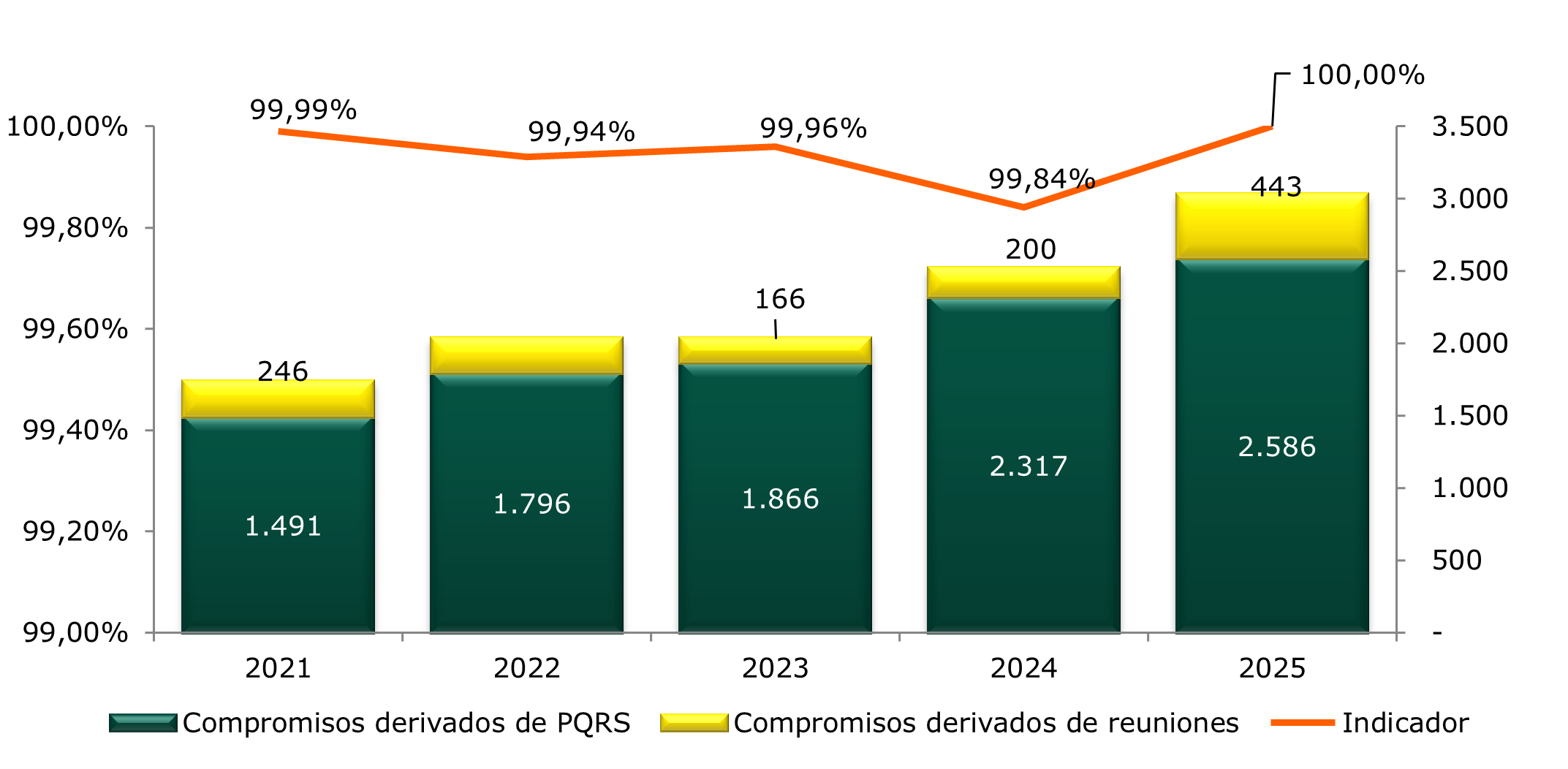
Ecopetrol S.A. creates various spaces to develop relationships with its stakeholders, which are registered in the Salesforce® CRM to ensure traceability and control. This registry enables monitoring of each space and its associated agreements, ensuring their effective management and timely closure.
Within these spaces, information is organized by origin type, facilitating the analysis and prioritization of actions.
Table 6
Distribution of Registered Meetings by Origin and the Number of Agreements Registered, Together with their Compliance Rate
| Origin | # of meetings | % of total meetings registered | Agreements created | Agreements/meeting (average) | % of compliance with agreements |
|---|---|---|---|---|---|
| Meetings with unions | 605 | 24.44% | 220 | 0.36 | 100% |
| Meetings with supplier | 474 | 19.15% | 7 | 0.01 | 100% |
| Relationship-building meetings | 461 | 18.63% | 62 | 0.13 | 100% |
| Institutional Relations | 214 | 8.65% | 23 | 0.11 | 100% |
| Alarms and environmental incidents | 234 | 9.45% | 155 | 1.66 | 100% |
| Social investment | 127 | 5.13% | 55 | 0.43 | 100% |
| Dialogue Processes | 97 | 3.92% | 1 | 0.01 | 100% |
| Response to PQRS | 85 | 3.43% | 2 | 0.02 | 100% |
| Social and environmental obligations | 78 | 3.15% | 5 | 0.06 | 100% |
| Roundtables | 61 | 2.46% | 5 | 0.08 | 100% |
| Meetings with property owners | 19 | 0.77% | 9 | 0.47 | 100% |
| Labor Relations | 17 | 0.69% | - | - | - |
| Programs benefiting the communities | 3 | 0.12% | - | - | - |
| Total | 2,475 | 100% | 544 | 2.37 | 100% |
3. Internal cooperation
To contribute in an articulated way to the Integral territory management and in line with the fulfillment of the 2040 strategy, Ecopetrol and its group develop cooperation initiatives among the Corporate Vice Presidency for Territorial Transformation, the areas where they intersect, and the different business lines, in order to develop joint actions that lead to territorial transformation. This approach aims to enable cooperation across territories and strengthen trust among stakeholders, which, on the one hand, allows the fulfillment of the Company's goals and, on the other, contributes to territorial development.
Similarly, Ecopetrol has strengthened relationships with contractor companies, unions, subsidiaries, and partners by establishing spaces to align on managing the territory, promoting good socio-environmental business practices, and developing joint proposals for the prevention and resolution of conflicts.
4. Strengthening Institutions and the Community
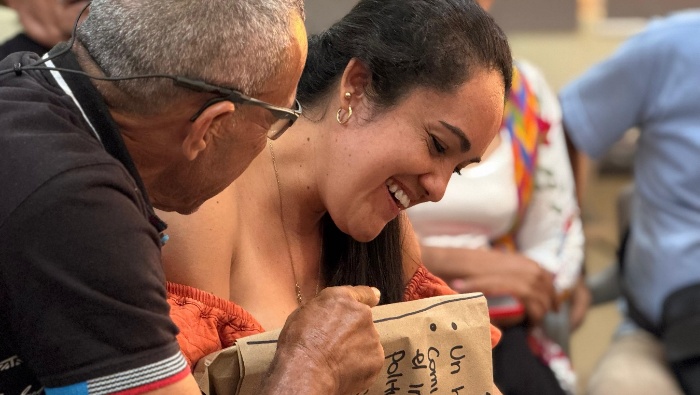
SCHOOL OF SOCIAL DIALOGUE FOR TERRITORIAL TRANSFORMATION
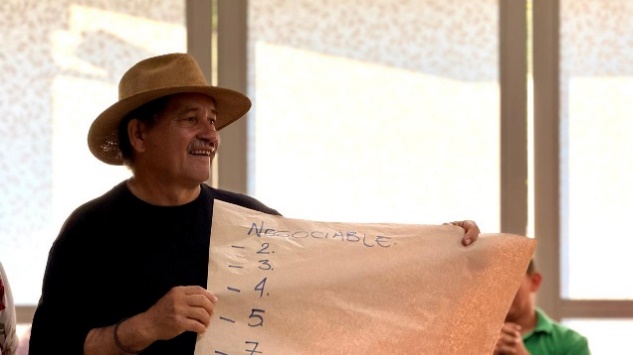
The School of Social Dialogue for Territorial Transformation is conceived as a key relationship tool to enhance facilitation skills, reflect on the role in the transformation of conflicts, and strengthen institutional scenarios for participation, contributing to the construction of a shared vision of territorial development and allowing us to move from crisis management to territorial transformation.
The implementation of the School of Dialogue materialized in four (4) regionals:
- Orinoquía (Villavicencio)
- Central (Barrancabermeja)
- Eastern (Puerto Gaitán)
- Andean South (Huila)
157 representatives from Community Action Boards, social leaders, associations, ethnic communities, unions, and local authorities participated in these initiatives, thereby strengthening capacities for multi-stakeholder dialogue and territorial governance and establishing dialogue as the primary engagement tool for the Ecopetrol Group and its stakeholders.
Figure 6
School of Social Dialogue – Orinoquía Regional (Villavicencio), 2025
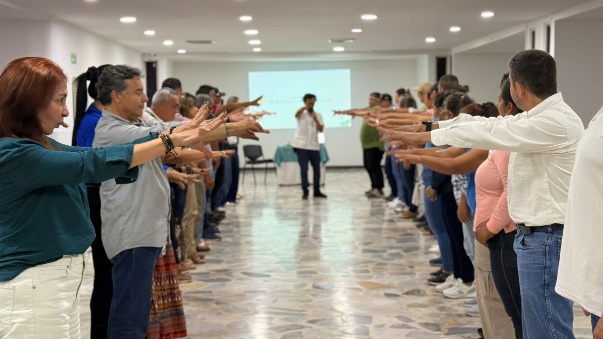
Figure 7
School of Social Dialogue – Central Regional (Barrancabermeja), 2025
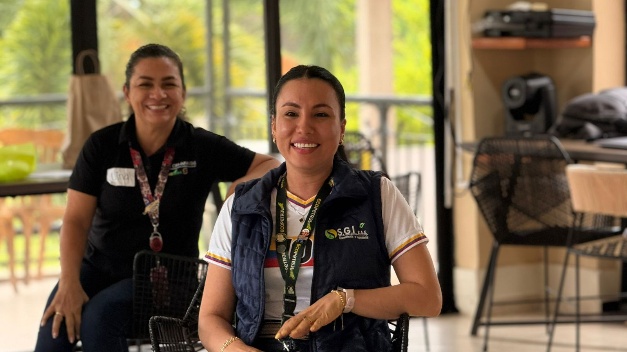
Figure 8
School of Social Dialogue – Eastern Regional (Puerto Gaitán), 2025
5. Territorial Planning
Integral territory management is based on a rigorous planning process that articulates the themes of dialogue and relationships, environmental management, socio-environmental investment, physical safety, and land management to make the Company's operations and projects viable and contribute to the development of the territories. This process involves participation by Ecopetrol Group’s operational and transversal areas and requires continuous coordination and articulation with them. The socioeconomic dynamics and gaps across the territories, trends in social conflict, the main risks and opportunities, and the critical activities of the business are considered. With this information, and in a participatory manner, regional bets and the objectives to be achieved are prioritized in alignment with the national development plan, departmental and municipal plans, and participatory exercises carried out with the communities. With all these inputs, the integral territorial plan is developed in a participatory manner, identifying the relevant milestones and the main actions to be carried out during the established period, which, for this opportunity, corresponds to 2024 to 2025.
In 2025, five territorial plans were monitored periodically; actions were updated, including those for the Energy for the Transition business line; spaces for dialogue and stakeholder relationships in the territory were strengthened; and opportunities for territorial development were jointly identified.
6. Monitoring, Analysis, and Forward Planning
To strengthen strategic decision-making, a systematic process for monitoring, analyzing, measuring, and following up on the critical variables that affect the territories, as well as the relevant environmental incidents and alarms that may affect the continuity of the Company's operations, is established.
This exercise integrates identification, description, analytics, and data-driven forward planning for environmental events, enabling the anticipation of scenarios and the generation of timely, actionable knowledge for informed decision-making. Complementarily, a structured and continuous understanding of the territory is consolidated through open-source information, which facilitates the identification of causes, conjunctures, and territorial dynamics. These inputs provide strategic information in a timely manner to the Situational Analysis of Environment Scenarios (EASE, for its acronym in Spanish) and other regular spaces, both at the regional and national levels, strengthening internal cooperation and enabling business decision-making in an anticipatory, coherent, and evidence-based manner.
As part of the monitoring and analysis process, key indicators of territorial conflict transformation are tracked. Among them, the indicator for non-materialized alarms stands out: at the end of 2025, it reached 80.79%, meaning that out of every 100 alarms identified, approximately 81 did not materialize. This result indicates a high level of anticipatory effectiveness, achieved through the strengthening of social dialogue processes, institutional management at different levels, and timely internal articulation, contributing significantly to risk mitigation and the protection of the Company's operational continuity.
To provide input for business decision-making, 132 territorial analysis products and 28 dashboards were generated, enabling cross-referencing of information across the Company's transversal areas with data from the Dialogue and Relationship Management. Additionally, in synergy with the Vice Presidency of Exploration, Development, and Production, material impacts from environmental incidents on production were identified and associated, specifically the deferred production linked to this type of event. This analysis was carried out by cross-referencing information from the production and environmental monitoring databases, enabling identification of the causes of incidents affecting production.
7. Energy Equity
In response to new opportunities in the energy business for the transition, as of September 1, 2024, the Corporate Vice Presidency for Territorial Transformation and HSE creates the Territorial Management and HSE Energies for the Transition Department, which aims to:
- Direct and ensure, within the framework of the Territorial Management Process, the viability of energy projects for the transition by providing guidelines for developing concepts and deliverables for the maturation phases, including interdependencies, analysis of socio-environmental conditions, risks, and impacts, in alignment with the Territorial Management Strategies and in coordination with VTT Department Managers and Heads.
- Resource planning for the structuring and execution of energy initiatives and projects for the transition.
- Ecopetrol's Participation in Energy Communities and Energy Equity.
- Foster knowledge and ownership of the energy transition through the participation of our stakeholders (state, community, civil society, and cooperation organizations), fostering an inclusive and collaborative approach.
Energy equity initiatives leverage the Ecopetrol Group's energy transition and align with the organization's strategic TESG objectives (SosTECnibilidad as it is known in Spanish) by leveraging innovative power generation technologies and encouraging community participation. These initiatives support the fulfillment of the objectives of the 2040 Strategy in four (4) ways:
- They enable the building of strong, trusting relationships with internal and external stakeholders in the territory to support the projects from a social standpoint (Strategic Pillar: Grow with the Energy Transition).
- They align with and reinforce social investment in access to renewable energy, helping close energy poverty gaps and strengthen the sustainable and integral transformation of territories (Generating value through TESG).
- They decarbonize the local economy, thereby reducing greenhouse gas emissions to level 3, exceeding the Company's objectives for emissions levels 1 and 2 (Generating value through TESG).
- They enable testing of new technologies and their social appropriation, aiming to validate new business models for the Ecopetrol Group's subordinates and subsidiaries (Cutting-edge knowledge).
The initiatives seek to:
- Facilitate the energy transition: Promote the implementation of Energy Equity initiatives through FNCER to advance a more sustainable and resilient energy model in Colombia, in line with Ecopetrol's 2040 Strategy, "Energy that Transforms".
- Contribute to business sustainability: Build trust-based relationships with stakeholders in the territories and allocate resources to generate shared prosperity, promoting sustainability, inclusion, and territorial peace.
- Innovate in technology and business models: Explore and adopt new technologies and business models, which can be applied in the context of Energy for Transition to improve efficiency, reduce costs, and increase the acceptance of renewable energies.
- Establish Strategic Partnerships: Promote collaboration with academic, industrial, governmental, and non-governmental entities, international cooperation organizations, and allies to leverage synergies, share knowledge and resources, and co-create energy solutions that benefit communities.
- Foster the technical and financial sustainability of Energy for Transition initiatives: Comply with all applicable regulations and standards when implementing Energy Equity initiatives to ensure transparency, fairness, and respect for the rights of all stakeholders.
Between 2024 and 2025, 18 Energy Communities have been registered with the Ministry of Mines and Energy, benefiting more than 16,000 people, as shown in Table 7:
Table 7
Energy Communities
| Departament | Municipality | Energy Community | Date of Resolution creating the Energy Community |
|---|---|---|---|
| Santander | Puerto Parra | Ecoenergías del Carare | 20/11/2024 |
| Santander | Puerto Parra | Amigos de la Ciénaga de Chucurí | 20/11/2024 |
| Santander | Barrancabermeja | Brisas del Rio Magdalena | 20/11/2024 |
| Santander | Puerto Parra | Asomucare Ecoenergético | 20/11/2024 |
| Valle del Cauca | Cali | Farallones de la vida | 20/11/2024 |
| Guajira | Manaure | Ethic Rural Academic Institution and Boarding School Lachoon Mayapo – Headquarters | 6/12/2024 |
| Guajira | Manaure | Drinking Water Supply Asociación de Usuarios Win Manzana | 9/12/2024 |
| Santander | Puerto Parra | Ecomacias | 20/12/2024 |
| Santander | Barrancabermeja | Ecoenergía Pescomagda | 20/12/2024 |
| Putumayo | Orito | Ethic Rural Academic Institution Puerto Rico - Selva Verde Branch | 22/05/2025 |
| Putumayo | Orito | Ethic Rural Academic Institution Puerto Rico - Campo Cañaveral Branch | 22/05/2025 |
| Putumayo | Orito | Ethic Rural Academic Institution Puerto Rico - Campo Hermoso Branch | 22/05/2025 |
| Putumayo | Orito | Ethic Rural Academic Institution Puerto Rico - Pitham Uk Branch | 22/05/2025 |
| Putumayo | Orito | Ethic Rural Academic Institution Puerto Rico - Cuaiquer Awa Branch | 22/05/2025 |
| Putumayo | Orito |
Ethic Rural Academic Institution Puerto Rico – La Rivera Branch |
22/05/2025 |
| Putumayo | San Miguel | Ethnic Academic Institution Tnkat Awa Kamtatkit Kamma Kantatkit – Primavera Branch | 22/05/2025 |
| Putumayo | Orito |
Ethic Rural Academic Institution Puerto Rico – El Temblón Branch |
23/05/2025 |
| Putumayo | Orito |
Ethic Rural Academic Institution Puerto Rico – La Turbia Branch |
23/05/2025 |
The Ecopetrol Group's business activities generate value in the territories, which is further enhanced through strategic social investment to close gaps and drive territorial transformation. Social investment is planned, structured, and executed through a portfolio of voluntary and mandatory projects, aligned with the Sustainable Development Agenda and based on intersectoral partnerships.
The Ecopetrol Group's social investment projects are organized into 3 programs and 6 lines of investment to help close gaps and enable operations: i) Improvement of essential living conditions, ii) Income generation, and iii) Transformation of human capital. Based on these lines of investment, Ecopetrol contributes comprehensively to the United Nations Sustainable Development Goals, including SDG 7 (Affordable and Clean Energy), SDG 6 (Clean Water and Sanitation), SDG 4 (Quality Education), SDG 3 (Health and Well-being), and SDG 10 (Reduced Inequalities), with the most emphasis placed on these goals.
Thanks to social investment, the Ecopetrol Group generated 19,423 direct and indirect jobs in 2025, of which 57% correspond to Ecopetrol S.A.
As a result of social investment and reduced conflict in the territories, a net profit of $93,563 million2 was achieved in 2025 (184% higher than in 2024). For its part, Ecopetrol S.A. generated an impact on the regional GDP of $1,110,167 million, exceeding the 2024 impact by 41%.
It is worth noting that, in 2025, Ecopetrol S.A. consolidated a portfolio of investments that contribute to the energy transition, comprising 65 projects amounting to $363 MM, through which 138 thousand people will benefit from improved access, quality, and cost in the use of renewable energy sources, thus contributing to sustainable development and closing energy gaps in the territories. Of these, 5,862 were reached in 2025.
Likewise, a portfolio for La Guajira has been consolidated, and in 2025 Ecopetrol S.A. invested $13.09 billion, benefiting 223 thousand people and completing 9 projects, of which the following stand out: 1) the delivery of 3,000 natural gas connections through networks in Dibulla, Disdistraction, El Molino, Fonseca, Riohacha, San Juan del Cesar, Uribia, Urumita, and Villanueva; 2) the improvement of three civil infrastructure works: i) the Office of Indigenous Affairs of Uribia; ii) the Luis Antonio Robles Educational Institution in the Camarones township; and iii) the San Rafael Educational Institution in Comejones, Manaure; 3) the implementation of the photovoltaic solution for the high school of the Laachon Ethnic Academic Institution in the township of Mayapo; and 4) care for 6,062 people from 118 Wayuu indigenous communities during health days.
In addition, the Ecopetrol Group reaffirmed its commitment to closing gaps and building peace in the Areas Most Affected by the Armed Conflict (ZOMACs3). In this framework, through both strategic (voluntary) and mandatory investments, $127 billion COP were allocated and, through the Works-for-taxes Mechanism created by the National Government, interventions totaling nearly $109,681 billion COP were executed, in sectors such as road infrastructure, drinking water and sewage, energy, education, and public health, among others.
As a result of portfolio investments made in 2025 and in previous years, Ecopetrol S.A. received two recognitions in 2025 from the Global Compact Network Colombia "To Good Practices in Sustainable Development": 1) For the contribution to SDG No. 2: Zero Hunger, thanks to productive programs for more than 25,000 peasant families over the last three years, and 2) For the contribution to SDG No. 6: Clean water and sanitation, for the implementation of the project "Manzana Energy Community: Drinking Water and Renewable Energy for a Resilient Territory", which provided 13,101 people in the rural area of Manaure (La Guajira) with access to drinking water.
Also, in 2025, Ecopetrol S.A. received a Recognition at a Higher Level mention in the 2025 Social and Environmental Investment Index, organized by the firm Jaime Arteaga y Asociados (JA&A). The index measures the private sector's efforts to improve the living conditions of communities and/or population groups, based on voluntary investment in social and environmental projects. In addition, Ecopetrol received recognition from the Territorial Renewal Agency as the number one company among 283 for its outstanding commitment to the country's development through the execution of projects under the Works-for-taxes Mechanism.
Investment Lines
Program for the Improvement of Essential Living Conditions
Public Utilities Investment Line
These investments are intended to improve access to and coverage of basic public services essential for vulnerable communities in the areas of interest, to help raise the quality of life, and close existing gaps in unmet basic needs.
Energy & Gas
This line helps close gaps in access to energy and gas public utility services, reducing energy poverty and advancing the energy transition through renewable energy solutions. Currently, more than 8.1 million Colombians live in energy poverty, which is why Ecopetrol S.A. set a goal to connect 320,000 homes to gas service by 2040, equivalent to a 2.5% increase in national gas access coverage.
In 2025, 51,795 homes were connected to gas service, 157% more than in 2024. These users are located in the departments of Antioquia, Arauca, Atlántico, Bolívar, Boyacá, Caldas, Caquetá, Casanare, Cauca, Cesar, Córdoba, Cundinamarca, Huila, La Guajira, Magdalena, Meta, Nariño, Norte de Santander, Putumayo, Santander, Tolima, and Valle del Cauca. In addition, a new project to expand natural gas distribution networks and connect 199 users in El Carmen de Chucurí (Santander) began execution.
Four new agreements were also signed: (i) Department of Bolívar, natural gas connections for 1,000 users; (ii) Municipalities of Neiva and Tello, natural gas distribution networks and connections for 961 users; (iii) Municipality of Saravena - Phase III (Arauca), Liquefied Petroleum Gas (LPG) connections through networks for 5,000 users; and (iv) Municipality of Tame - Phase III (Arauca), LPG connections through networks for 3,200 users.
Regarding electrical power utility service through the networks, two projects are being implemented in the township of El Morro de Yopal (Casanare), which will connect 804 beneficiaries across 14 villages. Additionally, a photovoltaic solar generation system was installed to supply and optimize energy for the high school’s kitchen and dormitories at Laachon Ethnic Academic Institution in Manaure (La Guajira), benefiting 1,593 students and 62 teachers, for a total of 1,655 people.
For its part, in 2025, three projects for individual photovoltaic solar solutions were implemented through the national government's Works-in-lieu-of-taxes mechanism, connecting 2,830 beneficiaries and increasing service coverage in the rural areas of the municipalities of Orito, San Miguel, and Valle del Guamuez (Putumayo). In the same sense, through the Agreement model of the Works-in-lieu-of-taxes mechanism, 14 projects for individual photovoltaic solar solutions were contracted to connect 13,832 new beneficiaries across 310 villages in Támara (Casanare), Santa Rosa and Mercaderes (Cauca), Curumaní and San Diego (Cesar), Maicao and Riohacha (La Guajira), Chaparral (Tolima), Puerto Asís, San Miguel, and Valle del Guamuez (Putumayo), Tierralta (Córdoba), Mallama (Nariño), and Cravo Norte (Arauca). The implementation of these agreements will begin in the first quarter of 2026. In addition, the installation of individual photovoltaic solar solutions for 1,268 beneficiaries in the Municipality of Puerto Wilches (Santander) was completed.
On the other hand, a new agreement was signed to install individual photovoltaic systems for 632 beneficiaries in Cubarral (Meta).
Access to adequate, high-quality energy sources improves habitability, making homes more functional and safer. In addition, having energy frees up time for education and job placement, promotes gender equality, and supports well-being, while contributing to a clean and healthy environment. These projects reaffirm the commitment to closing gaps in access to essential public utility services, creating conditions to guarantee access to energy, and move toward the universalization of the service.
Drinking Water and Basic Sanitation
Ecopetrol S.A. has set a goal of improving access to drinking water for more than 1 million people by 2040 and of contributing to closing the coverage gap by 2.1% at the national level. These investments will improve the living conditions of the rural population, reducing cases of gastrointestinal and skin diseases. Alternative supply solutions and nature-based solutions will be implemented to ensure the proper management of domestic wastewater.
In 2025, the Ecopetrol Group provided access to drinking water and basic sanitation for 6,494 people. The completion of two projects stands out, namely the construction of the Drinking Water Treatment Plant (PTAP) of Altos de Pompeya in the rural area of Villavicencio (Meta) and the energy communities of the Vida Silvestre project developed in Puerto Parra (Santander), where renewable energy solutions and drinking water access were implemented.
During the 2025 term, four agreements were signed that will help close gaps in access to drinking water and basic sanitation for more than 13,000 inhabitants of Puerto Wilches (Santander), Aipe (Huila), Uribia (La Guajira), and Cartagena (Bolívar). Likewise, technical support was provided for the formulation of the construction project for the new catchment of the Ipiales (Nariño) aqueduct system, which will be developed by CENIT and will benefit more than 45,000 inhabitants.
Similarly, three projects continue to be implemented to benefit more than 190,000 people, including the optimization of the PTAP for the urban aqueduct of Barrancabermeja (Santander), the construction of the sewerage system for the Arroz Barato neighborhood in Cartagena (Bolívar), and the drinking water supply scheme for Los Cocos in the rural area of Uribia (La Guajira).
In addition, to strengthen the capacity of territorial entities in the formulation and structuring of projects, progress was made in developing standard projects to provide homes in rural areas far from other settlements and in areas with high water stress, ensuring access to water. These initiatives combine new technologies, renewable energy, and differentiated management schemes that will help close the gap in access to water for human consumption in the areas of interest to Ecopetrol and its Business Group.
Health Investment Line
The Ecopetrol Group continues to strengthen the culture of health promotion and prevention, bringing medical services closer to vulnerable populations. In 2025, it provided services to 55,210 people. Among the main actions are:
- Health Days with Mobile Units
Since 2023, Ecopetrol S.A. has been developing low-complexity health days through Mobile Units, in partnership with the Employees' Union (Unión Sindical Obrera or USO) and in coordination with local administrations. Services include sample collection and processing, general medicine and dental care, vaccination, medication dispensing, and psychological support.
Likewise, priority is given to caring for vulnerable populations through services tailored to their needs: pap smear and pregnancy follow-up for women; pediatrics, oral health, and vaccination for children and adolescents; and guidance on managing preventable diseases and promoting healthy habits for the senior population. In 2025, these units toured strategic areas such as:
- Yondó (Antioquia), Cantagallo (Bolívar), Barrancabermeja, Puerto Wilches, Sabana de Torres, San Vicente de Chucurí, and Rionegro (Santander) in the Middle Magdalena region have received more than 56,000 services. 65% were provided in 2025. In addition, given the significant impact the mobile health unit has had on improving quality of life in the Middle Magdalena region, the implementation of a second phase is projected for 2026. This expansion will include new municipalities in the region and add the psychology service, thereby strengthening the comprehensive health offering for the communities.
- Cartagena (Bolívar), with more than 16,400 services provided in the year.
- Acacías, Castilla la Nueva, Guamal, El Dorado, Cubarral, Villavicencio (Meta), with more than 5,200 services provided.
In 2025, a unit was established to provide care for vulnerable populations in La Guajira, with the aim of contributing to compliance with Ruling T-302 of 2017, which seeks to collectively guarantee the rights of Wayuu children, and in line with the actions of the National Government. The provision of services will begin in the first quarter of 2026.
- Specialized Conferences
In Puerto Gaitán (Meta), health days for the rural population were held in partnership with the State Social Enterprise – (Empresa Social del Estado – ESE) of the departmental order. A second phase was signed in 2025, allowing coverage to be expanded during 2026 and 2027.
On the other hand, with support from the GE Foundation, 9 optometry brigades were conducted, resulting in 9,505 screenings and the delivery of 1,215 glasses to minors in the municipalities of Tibú, Norte de Santander; Cartagena and Cantagallo, Bolívar; Medina Ubalá and Soacha, Cundinamarca; Castilla la Nueva and Puerto Gaitán, Meta; and Bogotá.
For its part, in alliance with the La Guajira sectional Red Cross, health days were held in Manaure, serving 118 Wayuu communities and providing nearly 6,000 general medical and dental services, with a focus on children.
- Provision of Medical Equipment
To strengthen the capacity of public health centers, the following medical equipment was delivered in 2025:
- Provision of furniture and medical equipment to 9 hospitals in the Middle Magdalena region, located in the municipalities of Barrancabermeja, Puerto Wilches, Puerto Parra, Cimitarra, El Carmen de Chucurí, and San Vicente de Chucurí (Santander).
- Delivery of X-ray equipment to the public hospital in Yondó (Antioquia).
- Delivery of a mammogram to the public hospital in Cubará (Boyacá), an area of the country with the presence of the Uwa indigenous community and a high prevalence of breast cancer. This endowment helps prevent the disease by facilitating timely early-detection examinations.
Income Generation Program
Inclusive Rural Development Investment Line
Investment in this line aims to connect rural communities to productive chains by leveraging market opportunities, strengthening local capacity, and promoting the sustainable use of natural resources. By the end of 2025, the Ecopetrol Group reached 2,663 small producer families, generating prosperity through strategic, relevant, and impactful social investment.
During 2025, 18 projects were completed, with 2,663 participating families:
The Integral Agricultural Solutions Program (Agrosol), aimed at strengthening family farming and food security, completed 11 projects that provided technical assistance, training, and support to productive systems for 1,924 rural families in the municipalities of Puerto Gaitán (Meta), Puerto Wilches (Santander), Puerto Boyacá (Boyacá), Puerto Nare (Antioquia), Tame (Arauca), and Toledo (Norte de Santander). Notably, ethnic communities in Puerto Gaitán participated in the program, with women's leadership promoting the implementation of sustainable production systems for livestock, poultry, pig farming, fish farming, and biogas production.
On the other hand, 19 projects in which 7,950 peasant families continue to be implemented in partnership with the Food and Agriculture Organization of the United Nations (FAO), the Society for International Development Cooperation (SOCODEVI for its acronym in Spanish), the Universidad de los Andes, and other allies, with 42 peasant families participating. Of these participants, 42% are women and 29% are rural youth. The aim is to continue helping close the gaps between the territory's commercial opportunities and the productive capacities of peasant families.
Within the framework of the alliance with FAO – Food Supply Network of Meta, four peasant agro-businesses were built and equipped in Villavicencio, Cubarral, and Puerto Gaitán (Meta) in 2025, including photovoltaic energy solutions for their operation, thereby strengthening the productive and commercial capacities of four producer organizations and 248 rural producers.
Additionally, in 2025, with support from the alliance with SOCODEVI – Agroemprende Cacao Meta, seven producer organizations marketed 416 tons of cocoa, of which 24.8 tons were exported to Japan, Belgium, and Spain, at prices up to 48% higher than the national average, generating revenues of more than $12,716 million pesos this year and more than $35,600 million pesos accumulated, with a compound annual growth of 39.1%; in addition, key productive infrastructure was consolidated, along with sustainable commercial alliances and complementary economic activities to cocoa farming, such as birdwatching.
Entrepreneurship and Business Development Investment Line
The purpose of the investment in this line is to develop entrepreneurial capacity and train human talent to contribute to economic diversification, generate income, reduce dependence on oil activities to favor the energy transition, and promote the growth of the local productive apparatus. By the end of 2025, the Ecopetrol Group reached a total of 19,982 entrepreneurs, MSMEs, and young people. The following programs and projects are worth noting:
- Support for entrepreneurs, MSMEs, and diversification of business networks
In 2025, the Ecopetrol Emprende program, implemented in partnership with various institutions, continued, benefiting 1,489 entrepreneurs and MSMEs. This program promotes economic reactivation and diversification through specialized business support to modernize businesses, adopt technology, and connect with sources of financing and commercial opportunities.
Completed projects
In partnership with Créame Incubadora de Empresas, the Ecopetrol Emprende program concluded in 2025 in Puerto Gaitán (Meta), where it was implemented in the villages of Puerto Triunfo, Rubiales, and Santa Helena, as well as the Alto Unuma indigenous reservation, all of which are difficult to access. There, 99 entrepreneurs and MSMEs benefited, including 16 from the indigenous community. The program also concluded in Barrancabermeja, Sabana de Torres, and Rionegro (Santander), with a total of 116 participants.
For its part, in alliance with the Cartagena Chamber of Commerce, training for 1,274 microentrepreneurs from areas surrounding the Cartagena Refinery was completed in 2025, enabling them to strengthen their organizational and commercial capacities.
Ongoing projects
In partnership with Créame Incubadora de Empresas, the Program's implementation began in Cartagena (Bolívar) for 250 entrepreneurs and MSMEs, and in Yopal, Aguazul and Tauramena (Casanare), where the start-up and strengthening of 160 entrepreneurs in the tourism sector and industrial activities will be supported.
Additionally, in partnership with Caja de Herramientas, it initiated a project to develop sustainable enterprises associated with clean technologies, with priority given to young people, women, and the ethnic population of Maicao (La Guajira). The project will help 20 business units strengthen their operations, receive training in energy transition for their businesses, and provide renewable energy elements and equipment, or equipment that facilitates energy efficiency.
Finally, in partnership with the Universidad de Los Llanos, it launched a program to improve business skills and promote the sustainability and growth of 220 enterprises and MSMEs in the municipalities of Villavicencio, Acacías, Guamal, Castilla La Nueva, San Luis de Cubarral, and Puerto Gaitán (Meta).
Since its creation, the Entrepreneurship program has impacted 52 municipalities. Among the beneficiaries, 55% are women, 21% are young people between the ages of 18 and 28, 19% are victims of armed conflict, and 9% belong to ethnic populations. Although only 23% of the Colombian population lives in rural areas4, 43% of beneficiaries develop their businesses there, underscoring Ecopetrol Emprende's impact and priority focus on rural areas. Among the main achievements are:
- 33% increase in formal jobs.
- Formalization of 32% of the ventures (business ideas).
- 100% of participants improved their use of social media and digital skills.
- 57% increase in sales, reflecting higher revenue generation.
- The program has impacted 12 sectors of the economy, with the trade sector (22%) most affected, followed by services (17%), agribusiness (17%), industrial (11%), and cultural and creative industries (9%). It is highlighted that entrepreneurs and MSMEs across all programs have generated $289 billion in sales thanks to the support received, of which $56 billion corresponds to 2025. An SROI5 analysis found a positive impact, as beneficiaries' sales grew 7 times the program's total investment. These actions demonstrate Ecopetrol S.A.'s commitment to diversity and inclusion, economic sustainability, and the diversification of the business fabric in the regions where it operates.
- Strengthening the mindset and culture of innovation and the development of skills
This component develops pedagogical processes to strengthen skills such as critical thinking, creativity, assertive communication, leadership, and knowledge of the technologies of the Fourth and Fifth Industrial Revolutions, enabling young people to build a life project based on their interests. In this sense, through an alliance with the UNLAB 4.0 Innovation Laboratory at Universidad Nacional de Colombia, the Youth 4.0 Innovating and Transforming Territories program was implemented, impacting 1,674 young people in 2025. The program was completed in Cartagena (Bolívar) and continued in Barrancabermeja (Santander), Yondó (Antioquia), and Cantagallo (Bolívar).
- Public and Community Infrastructure Investment Line
Infrastructure is a fundamental pillar for boosting competitiveness, increasing productivity, generating employment, improving overall well-being, and reducing gaps between regions. Therefore, investment in this area aims to improve land interconnection conditions, facilitate commercial exchange, reduce travel times and transport costs, and create spaces for coexistence, civic participation, education, sports, recreation, and culture, while promoting sustainable solutions that integrate the use of renewable energy.
- Road infrastructure
By the end of 2025, the Ecopetrol Group conducted works on 147.91 km. These actions benefited more than 237,634 people in municipalities such as Castilla la Nueva (Meta), Aguazul, Yopal and Tauramena (Casanare), and Tame (Arauca). The following milestones stand out:
- Improved 3 km of footprint plate (or slabs) in the Visinaca tertiary road, benefiting 252 inhabitants of Tauramena (Casanare).
- Improved 15 km of the El Turuy road in the Municipality of Castilla La Nueva (Meta), benefiting 5,025 inhabitants.
- Improved 8 km of the Flor Amarillo – Pueblo Sucio road in Tame (Arauca), benefiting 3,392 inhabitants through the Works-in-lieu-of-taxes mechanism.
- Improved 6 km of tertiary roads in the municipality of Aguazul (Casanare) through the construction of drainage works and complementary activities in the villages of La Unión and Isla Turbayista, benefiting 151 inhabitants; and the maintenance and improvement of 20 km of tertiary roads in the ASOVEC Sector, benefiting 480 inhabitants.
- Improvement of tertiary roads in the department of Santander through the construction of footprint plates in the El Refugio sector of the village of La Vizcaína de San Vicente de Chucurí, benefiting 405 inhabitants; the maintenance of 8 km of tertiary roads connecting the villages of Paraguay and Villa Eva de Sabana de Torres, benefiting 930 inhabitants; and the maintenance of 11 km of tertiary roads connecting the villages of La Corcovada and Laguna de Oriente de Rionegro, benefiting 747 inhabitants.
- Maintenance of 5 km of the tertiary roads connecting the village of El Diviso de San Martín (Cesar), benefiting 588 inhabitants.
- Improved 1 km of tertiary road by constructing a footprint plate in the village of El Clavijo de Yacopí (Cundinamarca), benefiting 1,086 inhabitants.
On the other hand, projects continue to be carried out, with works scheduled for more than 78 additional km, and they will mainly benefit inhabitants of rural areas. Among them are:
- Improved 8.5 km of the Yotoco - Buenos Aires - El Dorado road and a section of the Muñecos - Cordobitas road in Yotoco (Valle del Cauca) under the Works-in-lieu-of-taxes mechanism.
- Improved 2.5 km of tertiary roads using footprint plate between the sectors of El Tulcán, Los Camachos, Caño Tigre and La Cooperativa, of the villages of La Tempestuosa and La Vizcaína in San Vicente de Chucurí (Santander).
- In Barrancabermeja (Santander), 1.6 km of roads were paved, and urban planning works were carried out to provide access to the township of El Llanito. Additionally, 4.9 km of urban roads were paved across 64 sections in 30 urban neighborhoods.
- Improved 32 km of the road connecting the village of Rubiales to the Neblinas Puerto Gaitán High Point (Meta).
- Improved 13 tertiary roads between Pajonal – Cerro de las Casas- Pisisi – Libertad- Labarces - San Antonio, in the municipality of San Onofre (Sucre).
- Improved 3.5 km of rural roads by constructing footprint plates and installing works of art in different villages of the municipality of Labranzagrande (Boyacá).
Likewise, the paving works on the Alto Neblinas – Rubiales road in Puerto Gaitán (Meta) stand out. Thanks to Ecopetrol's alliance with companies in the hydrocarbons sector, such as Cepsa, Hocol, Frontera and Tecpetrol, and with public institutions such as the Agency for the Infrastructure of Meta, the Government of Meta, the mayor's office of Puerto Gaitán, and the National Institute of Roads, the intervention will cover more than 50 km. In 2025, significant progress was made, with 99% of the work completed for the first 8 km; the signing and initiation of the work and audit contracts for Cooperation Agreement No. 2, in alliance with the Government of Meta and the Agency for the Infrastructure of Meta, for the paving of an additional 24.6 km starting at km16+500; and progress in contracting Cooperation Agreement No. 3, in alliance with the mayor's office of Puerto Gaitán (Meta), which projects paving 18.8 km beginning at Km67+700, thus benefiting more than 46,000 inhabitants.
- Public infrastructure of community interest
The Ecopetrol Group also allocates resources to improve spaces for education, sports, recreation, and culture, which energize meetings for coexistence and civic participation. In 2025, work on 67 infrastructure projects benefiting 197,206 inhabitants in the areas of influence was completed. The following stand out:
- Spaces for recreation and sports:
For the promotion of healthy lifestyles and sports practice, 3 projects were completed in 2025:
- Construction of a sports center and a covered multipurpose court in the Corregimiento of Guacirco de Neiva (Huila), for 2,904 residents.
- Construction of a community park in the Santa Rosa de Valle de Guamuez reservation (Putumayo), benefiting 630 residents.
- Construction of a bio-healthy park in the village of El Tropezón in La Esperanza (Norte de Santander), benefiting 575 residents.
- Spaces to promote culture and community gatherings
-
projects were developed, focused on promoting community participation that benefited 197,200 inhabitants, among which the following stand out:
- Construction of a communal hut in the village of Tres Matas de Cumaribo (Vichada) to benefit 450 residents.
- Construction of a community hall in the village of Aribas, San Martín (Meta), to benefit 240 residents.
- Improvement of the Office of Indigenous Affairs of Uribia, which benefits 195,532 residents.
In addition, the execution of the following projects is ongoing:
- Improvement of the Malocas Llanera Culture Park in partnership with the Meta Tourism Institute, benefiting more than 900,000 residents of Villavicencio and surrounding municipalities.
- Construction of the U'wa Intercultural Thought Center in Cubará (Boyacá), in partnership with the Governor's Office, will benefit more than 7,500 members of the reservation community.
The signing of the following agreements in partnership with territorial entities in 2025 is highlighted:
- Construction of the Neiva Botanical Garden (Huila).
- Improvement of the infrastructure of the San José de Orito Academic Institution, Guillermo Valencia campus (Putumayo).
- Improvement of the Unión Charte – Cupiagua Ring Road, in the village of El Triunfo Aguazul (Casanare).
- Improvement of the Mata de Limón – Floreña road and the El Palmar – El Aracal villages in Yopal (Casanare).
- Construction and provision of the comprehensive center for social inclusion in Guamal (Meta).
- Adaptation and improvement of the sports complex in the rural school, cultural and recreational nucleus of Chichimene in Acacías (Meta).
- Structuring of projects and preparation of studies and designs:
Ecopetrol's engineering activities generate strategic value for the Company, the country, and the communities by enabling projects to be structured to high technical standards, resulting in more efficient, safe, and sustainable investments. Engineering directly supports the implementation of Community Benefit Program (PBC for its acronym in Spanish) initiatives and the Works-in-lieu-of-taxes mechanism, ensuring that each project has robust studies to maximize its social impact. As a result, OXI investments are currently being implemented in the municipality of Yondó (Antioquia), with upcoming works programmed in Tame and Valle del Guamuez, strengthening the territorial presence and contributing to the closing of social gaps.
To strengthen the capacity of territorial entities to structure and mature projects, six (6) engineering projects were delivered in 2025 through study and design dossiers during the feasibility phase. These initiatives aim to leverage investments in road, education, and sports infrastructure, as well as rural aqueduct systems, in the municipalities of Aguachica, Castilla la Nueva, Puerto Boyacá, Cartagena, Yopal, and Aguazul, which are located in the departments of Cesar, Meta, Boyacá, Bolívar, and Casanare.
Along the same lines, progress was made in the technical development of three (3) educational infrastructure projects in the municipality of Acacías (Meta), aimed at improving six academic institutions by incorporating solar panel-based renewable energy systems. These projects are currently in the final phase of technical validation within Ecopetrol, and their dossiers will be issued during the first quarter of 2026.
Likewise, eight (8) projects continue to be executed in the feasibility and pre-feasibility phases, aimed at: improving eleven (11) road sections in the municipality of Valle del Guamuez; conducting work in ten (10) road sections in Villavicencio; building a community hall in Puerto Boyacá; developing an educational institution in Puerto Nare; and advancing the gas study for the municipality of Tibú. All these projects will be delivered in 2026, forming the basis for future social investments.
Human Capital Transformation Program
Education and Sports Investment Line
Ecopetrol S.A. contributes to the development of the regions where it operates, with the goal that, in the medium term, these regions will have better-prepared human capital, greater opportunities for social mobility, mechanisms for the peaceful resolution of conflicts, and a sustained reduction in poverty rates. To this end, the Company has focused its efforts on promoting better educational environments and school retention, complementing this strategy with actions to improve educational quality and coverage.
In 2025, the Ecopetrol Group benefited 256,496 students and teachers through projects that promote school quality, coverage, and retention. In addition, the Company reached 3.3% of the enrollment in the country's public basic and secondary education institutions in 2025, further consolidating its commitment to training and capacity building in communities.
The following projects are highlighted:
- Greater school retention
Ecopetrol implements actions to ensure that children and young people remain in the education system and make positive use of their free time, through interventions such as:
- Provision of school furniture: To improve learning environments and contribute to classroom safety, school furniture was delivered to more than 60 public schools, benefiting more than 65,000 students in Riohacha and Maicao (La Guajira), Barrancabermeja (Santander), and Villavicencio or Puerto Gaitán (Meta).
- Provision of school kits: To promote equitable access to education and ensure that students have basic materials, more than 90,000 school kits were delivered to students and teachers at public institutions in Ecopetrol's areas of interest, located in departments such as Meta, Casanare, Huila, Putumayo, Cundinamarca, Santander, Norte de Santander, Cesar, Antioquia, La Guajira, and Bolívar.
- Sports and musical schools: As part of the Ministry of Education's Centers of Interest strategy and to extend the school day, Ecopetrol S.A., in partnership with the Batuta National Foundation and the Futuros Llaneros Corporation, supported the operation of musical and sports schools in 2025, which served nearly 2,500 children, girls, and young women in the departments of Casanare and Meta. Beneficiaries are monitored to ensure their continued enrollment in the school system, with results exceeding 95%.
- Strengthening early education
In 2025, Ecopetrol provided 38 ICBF headquarters with pedagogical and didactic materials, benefiting children ages zero to five in municipalities such as Albania, Manaure, and Uribia (La Guajira). These donations help improve educational environments, making them safer and more relevant, and encourage families to enroll their children in the school system from early childhood.
Given the initiative's relevance to promoting safe and stimulating learning environments, the District of Cartagena and the ICBF publicly recognized Ecopetrol's contributions at an institutional event, highlighting the Company's commitment to education and the comprehensive development of children.
- Quality education
Ecopetrol promotes improvements in educational quality through teacher training, the provision of pedagogical materials, and monitoring to ensure the appropriation and sustainability of investments. This is realized through the following initiatives:
- Training for the energy transition: The training strategy for a just energy transition was implemented in Cartagena (Bolívar) and in the municipalities of Manaure, Riohacha, and Uribia (La Guajira), as well as Ubalá, Medina, and Paratebueno (Cundinamarca), benefiting 13,000 children and adolescents. These activities aim to bring this population closer to the science behind the energy transition, preparing them to face the labor challenges of this new economy.
- Fostering bilingualism: A pilot project was implemented in Guamal (Meta) to strengthen second-language instruction. The initiative included didactic training for teachers at official institutions and classroom support to ensure effective practice. The project benefited 20 teachers and 564 students and is currently in the evaluation phase for possible replication in other regions.
- Increased education coverage
Through these interventions, Ecopetrol S.A. promotes the expansion of the higher education offer and the improvement of educational infrastructure. The following stand out:
Ecopetrol High School program
In 2025, the program's 39th edition was launched through a national call published on the Company's website and disseminated through mass media. In this edition, 100 new scholarships were awarded, bringing the total number of students in current cohorts to 341. Of the selected candidates, 42% are women and 58% are men, all graduates of public educational institutions in the country, both rural and urban.
The call prioritized the inclusion of ethnic groups, people facing socioeconomic barriers, the population with functional diversity, women in STEAM (Science, Technology, Engineering, Art, and Mathematics) fields, and victims of the armed conflict. To ensure transparency, the list of 430,969 student records from the 2024 Saber 11 test, provided by the Colombian Institute for the Evaluation of Education (ICFES, for its acronym in Spanish) through the Ministry of Education, was used. In total, 6,059 applications were received.
Ecopetrol and Universidad Nacional de Colombia promote higher education for young people from Catatumbo in health careers
Within the framework of the Special Territorial Admission Program (PAET, for its acronym in Spanish), Ecopetrol S.A. and Universidad Nacional de Colombia partnered to facilitate access to higher education for 33 young people from the municipalities of Ocaña, El Carmen, Convention, Teorama, San Calixto, Hacarí, La Playa, El Tarra, Tibú and Sardinata (Norte de Santander) who will study the programs in Medicine, Veterinary Medicine, Zootechnics and Dentistry at the Bogotá campus of university.
The partnership contemplates that Universidad Nacional de Colombia covers tuition costs, while Ecopetrol S.A. finances students' living expenses, including food, lodging, and local transportation in Bogotá.
This effort constitutes a strategic social investment, aligned with Ecopetrol's objectives of closing education gaps, promoting the construction of peace and equity in ZOMAC and PDET territories, and contributing to sustainable development. It also responds to the guidelines of the 2016-2026 Ten-Year National Education Plan, which aims to improve access and coverage in higher education, reduce regional gaps, and ensure student persistence by reducing external dropouts. In addition, it contributes to the fulfillment of SDG 3, Quality Education, by expanding access to higher education. The total investment amounts to $21,126 million, of which Ecopetrol S.A. contributes $12,698 million and Universidad Nacional de Colombia contributes $8,428 million.
This project is part of Ecopetrol's integral strategy to close educational gaps through programs that span from early childhood to higher education.
Utopia Program of Universidad de la Salle
In 2025, six young people from Arauca (Arauca), Castilla La Nueva, Cumaral, and Puerto Gaitán (Meta), as well as from Aguazul (Casanare) and Tibú (Norte de Santander), received their degrees as agricultural engineers through the Utopia program, a partnership between Ecopetrol S.A. and Universidad de la Salle that promotes university education for rural young people from different regions of the country.
Currently, 24 students from Puerto Gaitán, Meta, continue their training at the rural campus of Universidad de la Salle in Yopal (Casanare), where they combine academic learning with leadership and entrepreneurship through a practical approach aimed at transforming the countryside. The Program covers tuition, maintenance, and technical support for the development of productive projects. In their final year, students return to their communities to apply the knowledge they have gained, drive sustainable agricultural initiatives, and boost local economies.
Utopia is a pioneering model in Colombia that aims to close gaps in access to higher education, train leaders for rural development, and strengthen productive and entrepreneurial capacities in the territories. Through this initiative, 85 young people from rural areas in departments such as Putumayo, Huila, Meta, Norte de Santander, and Arauca have been able to pursue university studies in agronomic engineering.
Competency-based certification, SENA Barrancabermeja:
Competency-based certification ensures recognition of the knowledge gained through work experience and the updating of techniques. This action is essential to promote the hiring of local labor, which is one of the community's main requests. For this reason, an alliance with SENA has been established to promote competency-based certification under the National Center for Construction Education and Research (NCCER) standard in Cartagena, with 400 beneficiaries.
Chevening Scholarships - Ecopetrol
This partnership seeks to enable at least 12 students to pursue specialized master's degrees at leading universities in the United Kingdom, thereby expanding human capital in the energy transition.
As a result of the 2024 call, two young people from Villavicencio (Meta) and Bogotá began their master's studies at the University of Strathclyde in Glasgow in fields related to the just energy transition, through an alliance between Ecopetrol and the Chevening scholarships.
During the 2025 call, 108,000 applications were received from around the world, of which 1,597 were from Colombia. This represents an increase in registrations of more than 70% for the country compared with 2024. According to Chevening, this increase is due in particular to Ecopetrol's participation, which gives greater recognition to the scholarship and to the Company's ability to reach regions where the energy transition is underway.
Improvement of academic infrastructure
Making educational infrastructure safer and more comfortable improves school environments. Ecopetrol's interventions in this area also incorporate elements that support the energy transition and promote the hiring of local labor. In 2025, the improvement of 28 academic venues that benefit 4011 students was completed:
Among the completed projects, the following stand out:
- In the department of Meta, the construction of dormitories in the village of La Cristalina de San Martín, benefiting 19 boarding students, and the improvement of the Quebraditas de Acacias academic institution, benefiting 25 students.
- In the department of Santander, the improvement of the main and primary buildings of the Academic Institution located in San Pedro Claver (KM 16) and that of La Aurora (8 KM) in Puerto Wilches, benefiting 421 students; the improvement of academic institutions in San Vicente de Chucuri and Puerto Parra, benefiting 823 students; as well as the improvement of the Llaneros de Rionegro Academic Institution, which benefits 24 students.
- In the department of La Guajira, the improvement of the infrastructure of the San Rafael school in Comejenes, El Pájaro de Manaure, benefiting 52 students, and the improvement of the administrative buildings of the Luis A Robles academic institution in the village of Camarones de Riohacha, benefiting 972 students.
In addition, seven academic infrastructure projects are underway, including the following:
- Construction and provision of furniture for the headquarters of the Technological Units in Barrancabermeja in partnership with the Government of Santander.
- Improvement of the La Esperanza headquarters of the Francisco José de Caldas Integrated School in the department of Norte de Santander.
- Construction and provision of furniture for the Rubiales academic institution (main building) located in the village of Rubiales de Puerto Gaitán, and construction of the Alfonso López Pumarejo school in the village of Alto Pompeya de Villavicencio (Meta).
- Improvement of infrastructure and construction of a covered sports center at the Laachon Ethnic Academic Institution in the municipality of Manaure (La Guajira).
- Maintenance of the El Palmar academic institution in Yopal (Casanare).
- Improvement of the infrastructure of the San José de Orito academic institution, Guillermo Valencia headquarters in Orito (Putumayo).
Of the 256,496 beneficiaries, 72% are children and adolescents, 5.2% are in early childhood, 29% come from rural areas, and 4.2% belong to indigenous, black, and Afro-descendant communities.
Works-in-lieu-of-taxes
Works-in-lieu-of-taxes is a mechanism created by the National Government in 2017 that allows companies to pay up to 50% of their income and complementary taxes by directly implementing social impact projects in the Areas Most Affected by the Armed Conflict (ZOMAC) that aim to build, improve, optimize, or expand infrastructure and provide the required services for road infrastructure, drinking water, sewerage, energy, education, and public health services, among other sectors.
In 2025, the Ecopetrol Group continued to lead the implementation of the mechanism in Colombia, achieving the largest share in the country at 24%. This was reflected in 22 new projects assigned by the Territorial Renewal Agency (ART, for its acronym in Spanish) during this term, valued at $271,669 million pesos, benefiting more than 379,830 Colombians. With the allocation of these projects, the Ecopetrol Group has accumulated, since the creation of the program, a total of 154 projects, valued at $1.4 trillion pesos, corresponding to 35% of the total allocated in the country.
In 2025, the Ecopetrol Group completed 21 projects totaling $109,681 million, benefiting more than 419,473 residents across 31 municipalities in 12 departments. The works included the improvement of 2.6 km of road in Prado (Tolima), Ovejas (Sucre), and Buenaventura (Valle del Cauca); the delivery of school facilities in 781 educational venues in the departments of Antioquia, Casanare, Cesar, Córdoba, Huila, Putumayo, Santander, Sucre, and Valle del Cauca; and the provision of furniture for 27 Child Development Centers (CDIS, for its acronym in Spanish) operating under the Colombian Institute of Family Welfare (ICBF) in Antioquia, Bolivar, Casanare, and Sucre. Likewise, on the energy transition front, 1,119 photovoltaic solar solutions for rural housing located far from other settlements were delivered, benefiting 4,879 inhabitants in Putumayo and La Guajira with electrical power services.
Impact and Result Over Social Investment
One of the main objectives of social investment is to contribute to the revitalization of local economies by promoting economic diversification beyond the hydrocarbon sector, encouraging the supply of local goods and services, and generating jobs. In this sense, during 2025, the Ecopetrol Group generated 19,432 jobs derived from the social investments made by the Company, of which 53% originated in the infrastructure and education lines.
Regarding the sociodemographic characteristics of the beneficiaries of social investment, in 2024 an exercise was carried out on projects carried out via agreement, finding that of the 90% of the agreements in execution, equivalent to 70,917 individuals, 83% are Colombian and 3% are Venezuelan. By gender, 51% of the recipients of the investment are women, 49% are men, and 0.02% report being non-binary.
Participants in the social investment were asked whether they self-identified as part of an ethnic group. Among those who do, 54% identify as black, mulatto, or Afro-descendant; 41% consider themselves indigenous; and only 2% identify as Raizal, Gypsy, or Palenquero.
By age group, social investment carried out through agreements focuses on children and adolescents, who account for 84%; 15% on adults (ages 19 to 60), and only 1% on people over 60 years of age.
Among recipients of social investment through agreements, by their highest level of schooling, the distribution is as follows: 70% are in primary and middle school (i.e., grades 1–9); 16% are in high school (grades 10–11); 8% are in university; 4% are in postgraduate studies; and the remaining 3% are reported among technicians and technologists.
45% of households benefiting from social investment are in rural areas. Of these, 94% are in socio-economic strata 1 and 2, and 76% report being in SISBEN A and B. 68% report receiving less than 2 minimum wages per month. This reinforces the fact that Ecopetrol S.A.'s social investment generates local development and focuses on those most in need.
Only 1.7% of social investment beneficiaries self-identify as victims of the armed conflict.
In 2025, progress is being made on developing a methodology and exercises to measure results, which is expected to be applied in 2026 to social gas projects and the provision of school furniture, as well as to capture information during the execution of projects financed under the Works-in-lieu-of-taxes mechanism.
In 2025, together with the Corporate Vice Presidency of Finance and Sustainable Value, the methodology for estimating the financial contribution of social investments in the territories and their contribution to Net Income was updated. To measure the contribution to Net Income, three variables are considered: i) alarm mitigation; ii) reduction in the average time of incidents; and iii) total social investment. Regarding social investment, three components are evaluated: contribution to GDP, job creation, and value creation. The results are expressed as increases in the income of vulnerable households and the financial return per unit invested, according to the social investment line. As a result of social investment and the reduction of conflict in the territories, a net profit of $93,563 million was enabled in 2025 (184% more than in 2024). Likewise, Ecopetrol S.A. generated a regional GDP impact of $1,110,167 million, exceeding the 2024 impact by 41%.
Corporate Volunteering
Ecopetrol's corporate volunteering, in conjunction with its Integral Management Strategy for the Territory, delivers mutual benefits for the Company, its employees, and the communities.
In 2025, corporate volunteering activities were strengthened and aligned with Ecopetrol S.A.'s social investment projects. As of December 31, 142 volunteer days were carried out, with the participation of 3,658 volunteers, of which 2,326 are direct employees and the rest are members of the community, contractors, pensioners, and interns. Likewise, more than 23,000 hours of volunteering were completed, reflecting the high commitment and dedication of the participants. By 2025, the corporate volunteering program had been consolidated as a key component to strengthen the Business Group's social commitment, promoting employee participation in initiatives that promote territorial transformation.
- The main volunteer activities in which the employees participated included beautification of academic institutions, awareness and environmental education days, community strengthening, health and optometry days, tree planting, gifting bicycles, and a gift donation campaign during the Christmas season.
- Methods were used to identify community needs and ensure the effectiveness of volunteer activities, such as territorial analysis sessions with regional teams, field reconnaissance visits to validate needs, and the definition of activities aligned with social investment projects during planning and execution.
Foundations in which Ecopetrol has an Interest
Ecopetrol, together with strategic partners, participates in the corporate governance of four business foundations established more than 30 years ago within its areas of influence: Fundación Amanecer, Fundación del Alto Magdalena, Fundación para el Desarrollo del Magdalena Medio, and Fundación El Alcaraván. These organizations contribute to territorial development by focusing on business development, social and financial inclusion, and the strengthening of the social fabric, infrastructure, and socio-environmental projects. Through these foundations, Ecopetrol's governing bodies provide strategic direction to promote territorial prosperity in the regions where Ecopetrol has a presence.
In terms of 2025 results, when we aggregate what was achieved among them, we have:
- Investment in socio-environmental projects: $124,352 million pesos in resources were managed to implement initiatives that promote sustainable development and community well-being.
- Community Outreach: The socio-environmental projects implemented by the foundations had a direct positive impact on 86,508 people, improving their quality of life and promoting sustainable practices.
- Promotion of Financial Inclusion: Through the microcredit line, a portfolio of $99,175 million pesos was managed, significantly contributing to financial inclusion in the regions where the foundations operate.
- Economic Empowerment: 24,012 individuals benefited from microcredits, facilitating access to opportunities for economic growth and business development.
Awards and Recognitions
As a result of portfolio investments made, Ecopetrol S.A. received two recognitions in 2025 from the Global Compact Network Colombia "To Good Practices in Sustainable Development": 1) For the contribution to SDG No. 2: Zero Hunger, thanks to productive programs for more than 25,000 peasant families over the last three years, and 2) For the contribution to SDG No. 6: Clean water and sanitation, for the implementation of the project "Manzana Energy Community: Drinking Water and Renewable Energy for a Resilient Territory", which provided 13,101 people in the rural area of Manaure (La Guajira) with access to drinking water.
Also, in 2025, Ecopetrol S.A. received a Recognition at a Higher Level mention in the 2025 Social and Environmental Investment Index, organized by the firm Jaime Arteaga y Asociados (JA&A). The index measures the private sector's efforts to improve the living conditions of communities and/or population groups, based on voluntary investment in social and environmental projects.
In addition, Ecopetrol received recognition from the Territorial Renewal Agency as the number one company among 283 for its outstanding commitment to the country's development through the execution of projects under the Works-for-taxes Mechanism. This distinction highlights its contribution to closing gaps and improving the quality of life of communities.
Within the Inclusive Rural Development line, two organizations that are part of the Agro Emprende Cacao program in the Department of Meta, promoted by Socodevi, the Government of Canada, and Ecopetrol, won Silver and Bronze medals in the national Cacao de Oro 2025 contest. Over the past 3 years, more than 20 recognitions have already been received, as a result of the collective effort of rural communities, which have placed the Department of Meta on the world map of cocoa.
Through the Youth 4.0 Program, in alliance with Universidad Nacional de Colombia, a participant from Cantagallo (Bolívar) in the Entrepreneurship and Business Development line won first place in the Museum of Modern Art of Bogotá's Visual Arts and Micro-Story Contest, a Latin American-level competition that represents a significant recognition of her career as an artist. Additionally, three young people from the most vulnerable neighborhoods of Cartagena (Bolívar) won the "Heroic Knowledge Awards: the night of the best," organized by the Mayor's Office to recognize the best initiatives and projects that positively impact the city's educational and social community. They won in the category "Impact Project: Sustainable Entrepreneurship" for their initiative to produce energy from plastic through pyrolysis, and in the category "Students who inspire" for the prototype of a low-cost robotic prosthetic arm made with recyclable materials.
In the Education and Sports line, the Juanfe Foundation recognized Ecopetrol as a Social Transformative Company for 2025, a distinction that highlights the Company's genuine, sustained, and measurable commitment to communities in vulnerable situations. This recognition highlights the contributions that have provided new opportunities for economic strengthening, well-being, and human development for teenage mothers, promoting the closing of gaps and sustainable processes of autonomy.
Similarly, Ecopetrol S.A. was recognized by the Colombian Institute of Family Welfare (ICBF) Regional Bolívar, which highlighted its support in strengthening early childhood service units in the city of Cartagena. The distinction highlighted the Company's contribution to improving pedagogical environments for the benefit and comprehensive development of children, promoting high-quality educational conditions in the centers served by the Regional.
The Ecopetrol Group has an Enabling Plan to guide physical safety actions, with a focus on Human Rights, in compliance with the Integral Management Strategy for the Territory, and with the cultural principle of "Life First" at the center.
The pillars that support the management of the plan are:
- Physical safety management: define and implement a physical safety model focused on protecting employees’ lives while performing their duties.
- Managing the protection of the Nation's critical and strategic infrastructure: define and implement cost-effective solutions and delay barriers to achieve self-protection of assets, preventing and/or reducing the safety impacts of the environment on people and operations. It is important to note that managing the protection of the Nation's critical and strategic infrastructure is fundamental, since these assets guarantee the country's supply, provide essential public utility services for all Colombians, and constitute the fundamental pillar of energy security.
- Managing the viability of the operation: to enable the development of the company's operations, projects, and new businesses that support the energy transition, the well-being of communities, and the provision of essential public utility services to all Colombians.
These pillars are managed through the analysis of security risks and the identification of possible impacts on human rights, in accordance with the provisions of the international standard of the Voluntary Principles on Human Rights, by defining a methodological standard.
Likewise, the risk analysis of physical safety and human rights serves as the foundation and roadmap for implementing the lines of action that enable the management of the identified risks.
The following is a list of the lines of action for risk management in physical safety and human rights:
- Culture of self-care and self-protection.
- Implementation of voluntary principles standards.
- Transparent relations and partnerships regarding safety.
- Technology solutions for physical safety.
- Assurance and operational control.
- A model for reducing impacts due to the acts of third parties.
- Crisis and business continuity system.
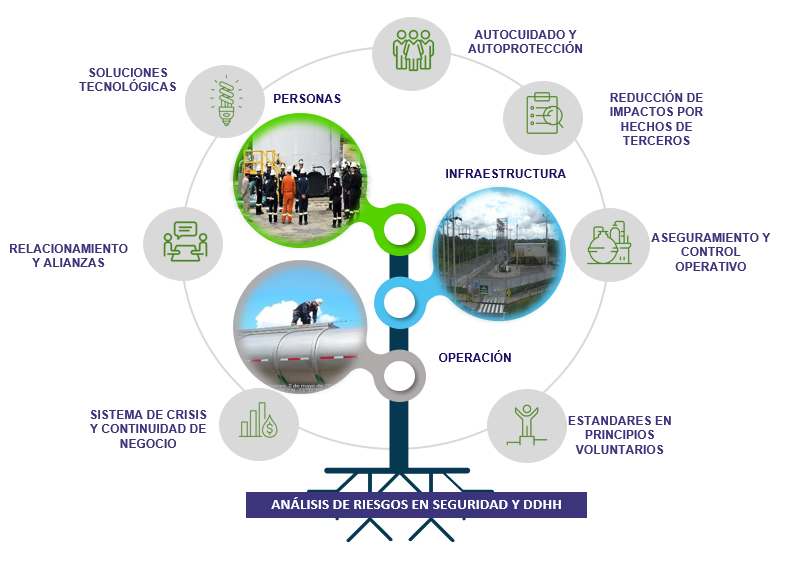
Figure 9
Enabling Plan for Physical Safety Management with a Focus on Human Rights
Footer
Actions

