

Web Content Viewer
Actions
buscador_1
Actions
Relevant Corporate Responsibility Issues
Actions
Relevant Corporate Responsibility Issues
Apr 21, 2026
Human Rights due diligence applied to particular cases
Ecopetrol is committed to implementing its human rights guidelines and continuing its duty of due diligence. That is why a series of cases are presented below, which have required special management efforts to identify, prevent, and mitigate negative impacts, monitor the implementation of human rights plans and their results, and report on how negative impacts are addressed.
Progress on environmental recovery
Ecopetrol S.A. continues to execute the environmental recovery activities established due to the contingency in the Lisama 158 well in March 2018, by deploying the actions described in the Environmental Recovery Plan (PRA, for its Spanish acronym). This plan incorporated the management measures set forth in the Comprehensive Environmental Management Plan for the Seas, the recommendations made by the Alexander von Humboldt Institute (IAvH), the guidelines generated by the UN, and the advice of partner expert consultants, as well as the company Geotecnologia, and Universidad Industrial de Santander - UIS.
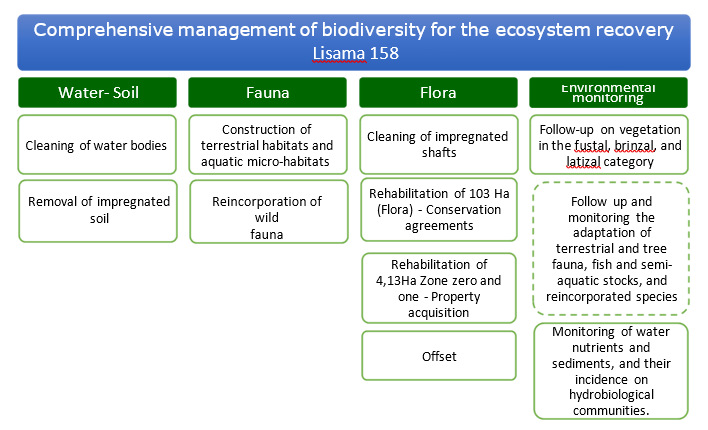
The PRA contemplates the biotic, abiotic, and social components, as illustrated below:

Source: HSE Vice Presidency
The following actions were implemented as part of the comprehensive management of biodiversity for the ecosystem recovery of the area:
Source: HSE Vice Presidency
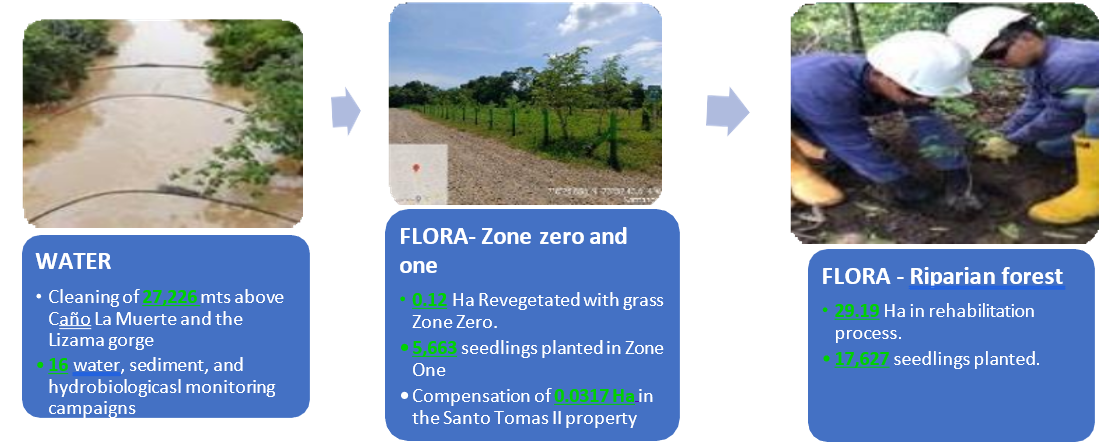
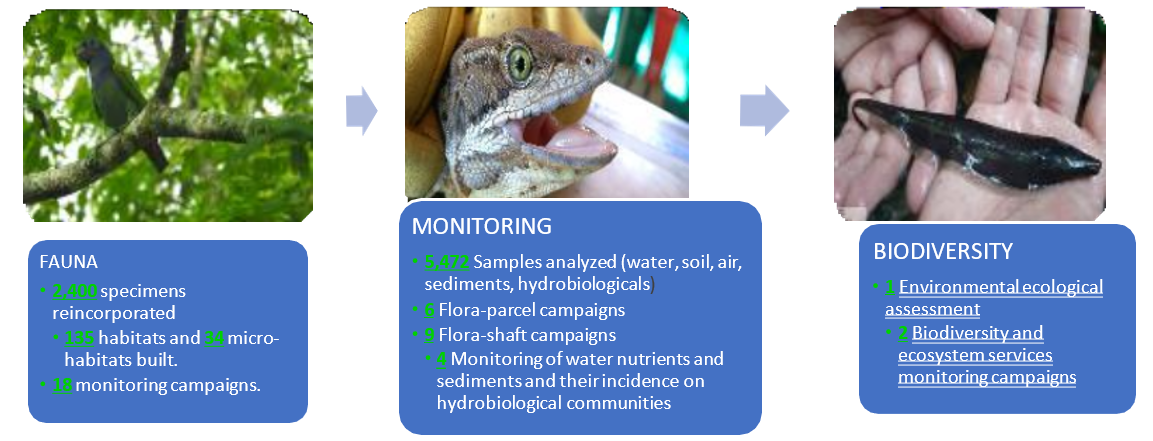
Below are some of the most relevant advances in the execution of the PRA:
Source: HSE Vice Presidency
Source: HSE Vice Presidency
These activities are subject to monitoring and control by Environmental Authorities such as ANLA, with the participation of the Autonomous Corporation of Santander (CAS), and municipal environmental secretariats (Barrancabermeja and San Vicente de Chucurí) generating reports on a quarterly basis. The thirteenth quarterly activity progress report was presented in December 2021, with an 87% progress.
Monitoring results
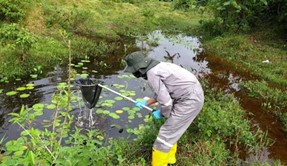
The results allow us to conclude that the water bodies of the Lisama gorge and Caño La Muerte report normal concentrations within the limits stipulated in Decree 1076 of 2015. The parameters slightly in excess are related to the influence of anthropic factors developed within and alongside the banks of the monitored water bodies, the discharges of domestic wastewater, the presence of solid waste, and other actions.
Based on the results of the nine (9) vegetation monitoring activities conducted in the Shaft category and the verification by expert forest pathologists and dendrologists, Ecopetrol S.A. observes that these specimens are growing and developing naturally.
The reincorporation actions in the PRA as an assisted process have been successful, and the predominant vegetation cover is offering better resources for the habitats of the species.
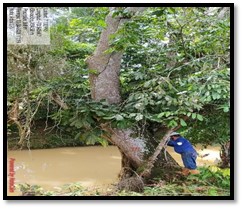
No evidence of deterioration was found during the execution of the first two sampling campaigns associated with the Biodiversity Monitoring Program, but on the contrary, there was evidence of an environmental recovery process, at site-scale, for indicators related to the structure of the vegetation and a stable environment, at landscape-scale, especially for indicators related to the composition of the fish community.
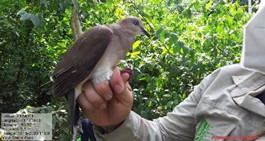
Leptotila verreauxi
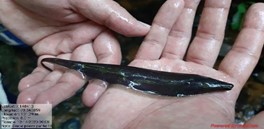
Apteronotus milesi recorded in caño La Muerte
Social Progress
In support of the strategy for advancing environmental recovery, engagement sessions were held in 2021 with communities, authorities, and institutions, such as tripartite dialogue spaces and systematic meetings with artisanal fishermen. This, to establish a two-way communication with stakeholders, and present the progress of the PRA, as well as the complementary actions undertaken with the communities of influence.
Similarly, by means of the communications strategy, concerns associated with this contingency and the implementation of the PRA were clarified via Facebook and the audiovisual magazine, La Voz de Lizama, which was broadcasted on social media and the local television channel, Enlace TV. Progress was made in communications with the publication of audiovisual pieces, graphic posts, loudspeaker announcements, contests, and live broadcasts on the Profe Aguas official page on Facebook.
In 2021, engagement sessions were held with communities, authorities, and institutions, including the spaces for tripartite dialogue and the systematic meetings with artisanal fishermen. In this way, Ecopetrol establishes a two-way communication with stakeholders to present the advances of the Lisama 158 PRA and the complementary actions deployed with the communities of influence.
As part of compliance with the PRA, SENA offered training programs in "body-to-body aquatic rescue," and Universidad del Magdalena in "how to capture information from fishing." Training sessions were also conducted on ecological issues by professionals from the regional social and environmental team.
The progress made on social investment projects includes locative improvement and in-kind donations works in the Yacaranda, La Unión, Guarumo, and Meseta de San Rafael educational institutions in Barrancabermeja. Also, improvement works and in-kind donations in the Pedral community center, the La Lucha village school, the Puente Sogamoso sports arena, and the Puerto Cayumba community center and multi-sports court in Puerto Wilches. In addition, Ecopetrol delivered the improvement works and in- kind donations in the Lizama II school in San Vicente de Chucurí, the rural gasification project of La Fortuna in Barrancabermeja, and the fishing monitoring contract in the lower part of the Sogamoso River implemented by the APETRAS fishermen's association. Progress was also made in the execution of rural gasification projects in La Lizama in San Vicente de Chucurí, and the project for the rehabilitation of riparian corridors in Puerto Wilches.
As part of the complementary actions undertaken, we provided support to the diocese of Barrancabermeja in the celebration of the patronal festival of San Francisco de Asís, with the organization of the first fair in the parish community and sharing knowledge seeds, and flavors. In this event, we handed out trees to be planted by the community, provided technical support with the presence of a forestry engineer in the environmental pedagogical workshop, and set up a stand to present the progress of the PRA during the event.
Furthermore, we held the “Huertas Caseras – Sembrando con Amor” volunteer activity, with help of Fundación Grupo Ecopetrol, allowing the expansion of home gardens to ensure food security for the fishing families in the El Llanito township, and maintaining healthy lifestyle habits with a balanced family basket.
Finally, the Company contributed to the striped catfish bans in the region by handing out fliers and conducting an outreach campaign. Support was also given to the follow-up visits conducted by the ANLA, which served to monitor compliance with the requirements set forth in the PRA framework. Thus, benefitting 2,000 people in the rural areas of the municipalities of San Vicente de Chucurí, Puerto Wilches, and the district of Barrancabermeja.
As a result of the social dialogue between the National Government and the Association of Traditional Authorities and U’wa-Asou’wa Councils, the Intercultural Dialogue Roundtable with the U’wa People was established in 2017 to provide a forum for monitoring the commitments agreed upon in 2014, 2016, and 2017. Within the framework of this forum, regulated by Resolution No. 0473 of 2017, the Ministry of the Interior has been carrying out the respective institutional follow-ups on issues related to infrastructure, territory, the environment, and human rights. Ecopetrol participates in all forums, supporting the institutional framework regarding the functioning of the Roundtable and the fulfillment of the commitments made. Ecopetrol actively participates in the Dialogue Table as a stakeholder in the region, with the aim of continuing to contribute to the resolution of differences through intercultural dialogue.
Ecopetrol–Asou’wa Engagement Plan. In 2017, an engagement plan was launched between Ecopetrol and Asou’wa (an association representing the 17 communities of the United U’wa Reservation in Santander, Norte de Santander, and Boyacá) as part of the strategy “Building a Shared Vision for the Territory.” The plan was based on three (3) pillars: i) direct and ongoing dialogue, ii) mutual understanding, and iii) building trust. The plan has facilitated a shift from confrontation and resistance to a willingness to engage in dialogue, understanding, and the exchange of knowledge, through an intercultural approach that allowed for an understanding of the concerns regarding the survival of the U’wa people in the face of industrial activities.
Likewise, the plan enabled the community to gain a deeper understanding of the strategies the company uses to protect the environment and to determine how the impacts resulting from extractive industry activities are prevented or mitigated.
Starting in 2021, progress was made in finalizing the details of several community-benefit projects for the U’wa people, related to food security and health, as well as the improvement of ancestral trails, which allow for better and safer mobility within the community’s reserve. Finally, progress was made on an agreement with the Government of the Department of Boyacá to build the “Center for Thought,” which will facilitate the creation of community gathering spaces, benefiting more than 7,500 people.
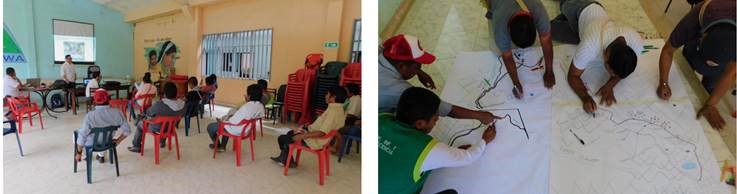
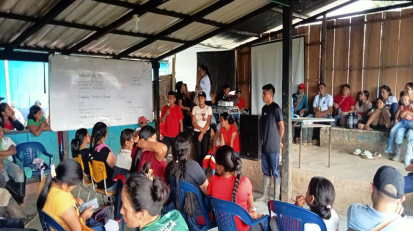
Workshop on Intercultural Recognition: Asou’wa and Ecopetrol. Source: Regional Hydrocarbons Management Office.
In 2022, following a change in the members of Asou’wa’s Board of Directors, Ecopetrol took on the challenge of continuing the intercultural dialogue and the social investment proposals that had been planned for their benefit, creating opportunities for participatory dialogue with members of the Uwa people on topics of mutual interest. Progress in the planning and execution of certain strategic investment projects was suspended at Asou’wa’s request, in response to the summons issued by the IACHR to the Uwa community to participate in the hearings and proceedings before the Inter-American Court. However, since then, frequent dialogue has been maintained with members of Asou’wa’s council, during which Ecopetrol reports on activities carried out in the area and coordinates actions to advance the Construction of the Center for Thought project.
Social Investment
Construction of the U’wa Intercultural Think Tank
The U’wa Think Tank is a joint initiative between Asou’wa and the Boyacá Governor’s Office, with construction currently 90% complete. The purpose of this center is to provide a space where the community can carry out activities to strengthen its self-governance and cultural practices.
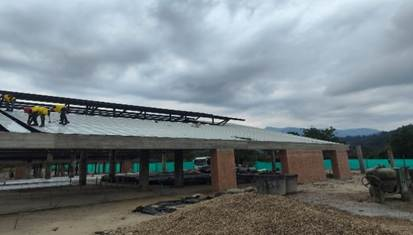
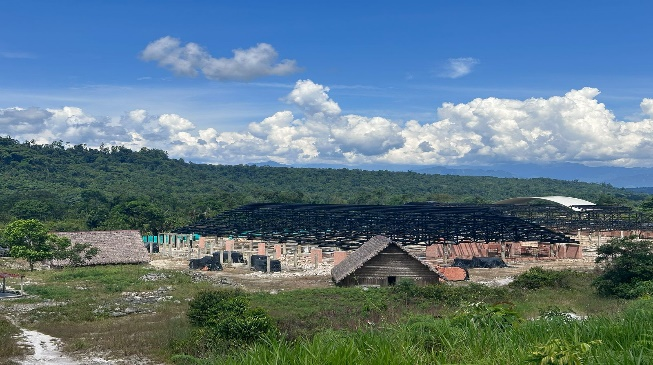
Promoting the Health and Nutritional Security of Uwa Indigenous Children and Youth
This health project was planned in collaboration with Uwa community leaders, recognizing that the Uwa people’s specific cultural context must be a priority to ensure effective care and a successful project. Accordingly, in 2022 and 2023, health outreach events were held with the support of the Operation Smile Foundation and Profamilia, benefiting 3,500 children and mothers from the U’wa indigenous community. This project is currently on hold.
Community Engagement Initiatives
In 2024, the following initiatives were implemented to maintain and strengthen our relationship with Asou’wa.
- Support for the Asou’wa Board of Directors meeting and the councils of the United U’wa People. Beneficiaries: 18 communities of the U’wa indigenous people. 2024
- Logistical support for the U'wa People’s Dialogue Roundtable, 2024.
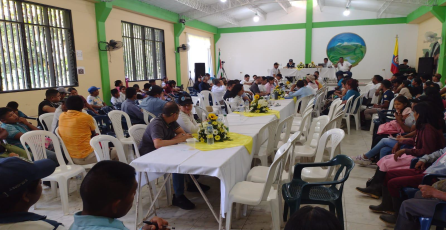
- Regional educational activities on the hydrocarbons industry in Toledo and Cubará. Duration: 2024. Beneficiaries: 100 people.
Ecopetrol currently has a permit to discharge treated produced water associated with the production activities of Campo Castilla into the Guayuriba River, in the municipality of Acacías, in the Department of Meta.
On December 14, 2020, the Cormacarena Environmental Authority imposed a preventive measure to suspend discharge due to apparent contamination in the water source, in accordance with the visits made by the Authority in the months of March and October of that year, and also due to an alleged breach of the provisions of follow-up writ PS-GJ.1.2.64.20.0329 of 2020[1]. Ecopetrol submitted several requests to the environmental authority to lift the measure, arguing that the discharge conditions fully complied with the provisions of Resolution 631 of 2015 and local regulations on Water Quality Objectives. An action plan was similarly presented to improve the water conditions of the river, including short, medium, and long-term actions to mitigate the natural clogging of the river, accelerate dilution, and improve the quality of the discharge. This action plan was approved by the environmental authority.
Considering above, Cormacarena ordered the provisional lifting of the preventive measure on June 11, 2021, subjecting it an effectiveness verification of the actions initiated by Ecopetrol. On November 24, 2021, the Company requested the permanent lifting of the preventive measure given its compliance with the parameters set forth in current national and local regulations.
It is worth pointing out that, due to the situations that gave rise to the preventive measure, Cormacarena initiated a sanctioning process on February 11, 2021, and, on December 17, 2021, a statement of objections was issued against Ecopetrol, which was notified on January 6, 2022. As a result of this process, a sanction could be applied against Ecopetrol.
Ecopetrol continues to comply with the actions recommended in administrative acts by the environmental authority and continues to submit periodic reports on the execution of deblinding activities[2]41 at the point of discharge, reports on the piping process in the Guayuriba River, and progress reports on the medium and long-term actions proposed in the discharge system improvement plan.
As part of its commitment to Human Rights, Ecopetrol S.A. has established relations with entities that are part of Colombia’s Comprehensive System of Truth, Justice, Reparation, and Non-Repetition (SIVJRNR, by its Spanish acronym), as is the case of The Truth Commission (CEV, by its Spanish acronym), created by means of Legislative Act 01 of 2017 "…which establishes transitional provisions in the Constitution for terminating armed conflict and building stable and lasting peace, as well as other provisions."
Ecopetrol has taken actions to continue engaging with State entities in specific mandates associated with the respect and promotion of human rights. Similarly, to keep its commitment to contribute to peace in the country, the Company has undertaken actions towards this objective, by engaging entities such as the High Presidential Council for Human Rights and Ecopetrl Group’s contribution to the “Public Works for Taxes” state initiative.
Ecopetrol has particularly engaged with the CEV, an extrajudicial entity part of the SIVJRNR, as follows:
- Providing timely response to information requests;
- Participating in different public forums such as the Dialogues for Non-Repetition and the meetings on "Dialogues, Business, and Truth;"
- Entering into inter-administrative cooperation agreements to assign a company official responsible for fulfilling the objectives and duties of the CEV, among others.
Furthermore, in order to contribute to the objectives of the CEV, a first report was prepared by Ecopetrol under the title of "Ecopetrol in Magdalena Medio: Corporate narrative on the impacts of armed conflict on the Company’s operations,” which was officially submitted to the CEV at a meeting led by Ecopetrol’s CEO, Felipe Bayón, and Father Francisco de Roux, President of the CEV, on August 12, 2021.
The expansion and modernization project for the Cartagena Refinery (the Project) has been audited and investigated by the Office of the Attorney General of the Nation (the Attorney General’s Office or PGN) and the Comptroller General of the Republic of Colombia (the Comptroller’s Office or CGR). Currently, all proceedings conducted by these entities have been concluded.
Four (4) criminal proceedings are currently underway, all of them against former employees of the Cartagena Refinery or contractors. None of the proceedings are being brought or have been brought against the Cartagena Refinery or Ecopetrol, either in Colombia, the United States, or any other country.
The administrative authorities (the Attorney General’s Office and the Comptroller’s Office) have issued various decisions. The matters under investigation, regarding which these oversight bodies have already issued statements, include, among others:
- Increase in the project budget through the five (5) exchange controls relative to the initial budget.
- Delayed start-up of the refinery.
- Adoption and implementation of billing procedures.
- Structuring and implementation of the incentive plan.
- Unidentified expenses in the execution of the Project.
None of these investigations concluded that bribery, fraud, or corruption had occurred.
Statements from the Attorney General’s Office
The Attorney General’s Office has issued four (4) decisions in favor of former officials and former members of the Board of Directors of Refinería de Cartagena and former members of the Board of Directors of Ecopetrol.
The Attorney General’s Office concluded that their conduct was not improper, as the additions to the project budget were necessary. It was demonstrated that the cost estimate and schedule presented by the contractor were incorrect and underestimated.
In the Attorney General’s Office’s view, the budget adjustments were the response to an erroneous budget projection by the contractor, which made it impossible to continue with the execution of the work unless the increase to the initial budget was authorized, and they were the most appropriate solution to proceed with the Project.
The Attorney General’s Office found that there was clarity in the process of structuring, implementing, and achieving the results of the incentive plan implemented during the Project’s development, and that the milestones required for payment were met.
Statements from the Comptroller’s Office
The Comptroller’s Office, as part of fiscal accountability proceeding PRF-005-2017, decided in 2018 to close the case and clear all those involved (former executives, former employees, contractors, and Ecopetrol’s insurers) regarding the approval of exchange controls 1 and 5, as they did not constitute financial damage, and to clear all former members of Ecopetrol’s Board of Directors regarding exchange controls 2, 3, and 4, considering that they made timely decisions to ensure the project’s financing and acted with diligence and prudence within the scope of their duties.
By a decision dated April 26, 2021, confirmed by the Comptroller’s Office on July 6 of the same year, five former officials of the Cartagena Refinery, seven former members of its Board of Directors, four (4) contractors, and three (3) insurers were found to be fiscally liable. However, their conduct is not related to acts of corruption, bribery, or fraud.
In the Comptroller’s Office’s view, the fiscal loss incurred in the Project resulted from decisions that led to a loss in value of the major investments, as excessive CAPEX additions were approved—exceeding levels commensurate with the return on capital contributed to the Project and its opportunity cost—during exchange controls 2 and 3.
The CGR considered the fiscal damage to be the sum of the portions of each addition to the Project’s CAPEX that undermined profitability and the value proposition, as reflected in the impact on the Project’s net present value (NPV) and internal rate of return (IRR).
Given the administrative nature of this decision, those found fiscally liable challenged the administrative act through the legal actions provided for in the Colombian legal system so that a judge of the Republic could determine its legality.
In November 2024, the first judicial ruling was issued in one of these proceedings, brought by a former member of the Board of Directors of Refinería de Cartagena. In that ruling, the CGR’s decision was declared null and void, among other reasons, because financial damage to the State had not been proven. Furthermore, it was considered that the increased investment to safeguard the existing facility was timely and made it possible for the Cartagena refinery to exist today.
The declaration of nullity of the CGR’s administrative acts is effective only against the plaintiff; the CGR filed an appeal against this decision, which will be decided by the Council of State.
Furthermore, regarding the loss of profits due to the refinery’s delayed start-up, on February 3, 2022, the Comptroller’s Office dismissed the case, finding no evidence of harm or damage to public assets, among other reasons, due to the forced postponement of the project schedule caused by adverse cash flow. This was due to the winter storm and labor disruptions, among other factors, that occurred during its execution. On March 1, 2022, the Comptroller’s Office’s Fiscal and Sanctions Decision Chamber confirmed the dismissal order.
Finally, in the proceedings regarding the amounts spent on the Project and its sources of funding, the Deputy Comptroller’s Office conducting the proceedings ordered the case closed, finding that the facts did not constitute damage to public assets, as the purpose of the expenditure was identified in all records.
Criminal Proceedings
In the criminal proceedings currently underway regarding matters related to the Project, no current employees of Refinería de Cartagena or Ecopetrol are implicated, and these two companies have been recognized as victims. Additionally, none of the crimes under investigation are related to bribery or fraud.
A conviction was handed down in the appellate court against two (2) former legal representatives of Refinería de Cartagena, which was subject to legal appeals; therefore, to date, there is no final criminal conviction for the acts under investigation.
Arbitration Against CB&I and Debt Collection
On March 8, 2016, Refinería de Cartagena initiated international commercial arbitration against MIH, CB&I UK, and CBI Colombiana S.A. (collectively, CB&I) before the International Chamber of Commerce (ICC) Arbitration Center, arising from the performance of the EPC Contract entered into between Refinería de Cartagena and CB&I in connection with the expansion and modernization project of the Cartagena refinery.
On June 7, 2023, Refinería de Cartagena was notified of the decision of the international arbitral tribunal (Arbitral Award) resolving the dispute regarding the EPC Contract. The arbitral tribunal ordered CB&I to pay USD 1.008 billion plus interest, accruing from December 31, 2015, until payment is made. Similarly, the arbitral tribunal dismissed CB&I’s claims for approximately USD 400 million, which included rejected or unpaid invoices, interest, and reasonable legal costs, among other items.
Following the Arbitral Award, on June 8, 2023, Chicago Bridge & Iron Company N.V. (now McDermott Holdings B.V.) and CB&I UK Limited filed a motion to set aside the arbitral award with the U.S. District Court for the Southern District of New York, seeking to prevent its recognition and enforcement in the United States. On January 10, 2025, the U.S. District Court for the Southern District of New York issued a ruling denying the motion to set aside filed by Chicago Bridge & Iron Company N.V. (now McDermott Holdings B.V.) and CB&I UK Limited against the Arbitration Award, and consequently, granted the request for confirmation of the award filed by Refinería de Cartagena, whereby the Arbitration Award was judicially confirmed.
On September 8, 2023, McDermott International Ltd. (McDermott) publicly announced that it would initiate financial restructuring proceedings for its subsidiaries in the United Kingdom and the Netherlands, CB&I UK Limited and Chicago Bridge & Iron Company N.V., respectively.
On February 27, 2024, Refinería de Cartagena was notified of the decision by the UK court, which ruled that the financial restructuring plan of CB&I UK Limited, a subsidiary of McDermott International Ltd., had been approved by that court. Regarding the reorganization process initiated by Chicago Bridge & Iron Company in the Netherlands on September 8, 2023, on February 25, 2024, an independent restructuring expert appointed by the Court put an alternative reorganization plan to a vote, under which Refinería de Cartagena would receive, among other things, an equity stake in the McDermott International Ltd. Business Group. On March 21, 2024, Refinería de Cartagena was notified of the Dutch court’s decision to approve the alternative financial restructuring plan of Chicago Bridge & Iron Company N.V.
Following the approval of the aforementioned plan, Refinería de Cartagena received (i) USD 70 million and USD 95 million made available under two separate letters of credit and (ii) USD 9 million corresponding to the reimbursement of legal fees. Additionally, 75,000 Series B redeemable non-voting preferred shares (Series B Preferred Shares) of McDermott were issued to Refinería de Cartagena.
As of September 30, 2024, Refinería de Cartagena valued the shares of McDermott International Ltd. using an income approach, projecting discounted cash flows to present value and taking into account factors such as risk premiums, publicly available information on McDermott International Ltd., the absence of significant influence or control by Refinería de Cartagena, and potential restructuring scenarios over time.
As a result of the fair value valuation, the accounting entry was recorded as a financial instrument in the amount of USD 234,525,440, which represents an increase in Refinería de Cartagena’s financial assets account offset by a decrease in the value of property, plant, and equipment.
On December 9, 2024, McDermott International Ltd. announced that it has completed the sale of its storage business (CB&I’s tank business) to a consortium of financial investors led by Mason Capital Management. Under the terms of the agreement announced on October 7, 2024, McDermott will receive $475 million in proceeds before taxes and transaction costs. In accordance with the terms of McDermott’s credit agreement, the proceeds from the sale will be used to repay the existing term loan of the CB&I tank business, provide cash collateral for certain McDermott letters of credit, and reduce an existing McDermott term loan.
Ecopetrol continuously monitors the operations of McDermott International Ltd. to identify and measure any potential changes in the fair value of the investment and/or risk premiums associated with the valuation model.

