

PautaInternas
Actions
buscador
Actions
Process Safety
Actions
Process Safety
May 14, 2025
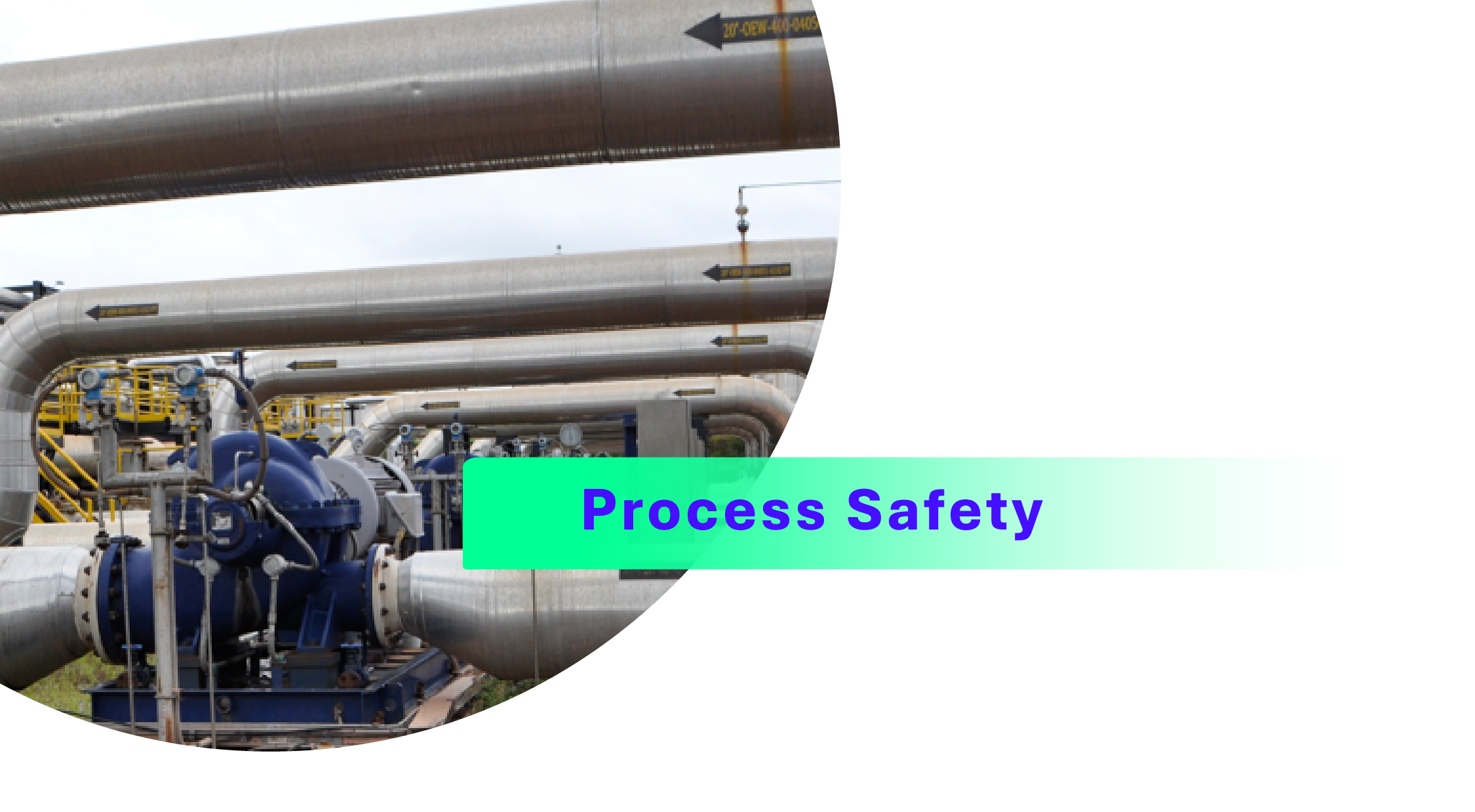
Ecopetrol applies technical standards and best practices for process safety and emergency management throughout all phases of industrial assets’ life cycle -including incorporation, operation/maintenance, and divestment - ensuring safe handling of energies and substances to protect people, facilities, and the environment.
Process safety management is a structured framework for managing and maintaining the integrity of hazardous operating systems and processes by applying measures, skills, and sound principles of administration, design, engineering, human and organizational factors, and operations and maintenance practices. Through this practice, it seeks to eliminate, prevent, control, and mitigate incidents resulting from the unplanned or uncontrolled release of hazardous substances or energy that could harm people, the environment, infrastructure, and/or the Company’s reputation.
Process safety centers on identifying, preventing, and mitigating low-frequency but severe risks, like hazardous releases, fires, and explosions. These incidents often result in catastrophic outcomes, including injuries, fatalities, economic loss, environmental impact, and damage to reputation and business continuity.
Process safety is primarily integrated into the HSE Management System and is most typically identified in the following areas:
- Comprehensive technological risk management (dynamic management of high-consequence risks)
- Change management
- Asset integrity
- Pre-start-up security check
- Process technology
- Operational procedures
- Safe working practices, such as Safe Isolation Systems (SIS) and Car Seals
- Asset integrity
- Structured operation
- Process security management in contracts
- Comprehensive emergency management
- Performance indicators and evaluations
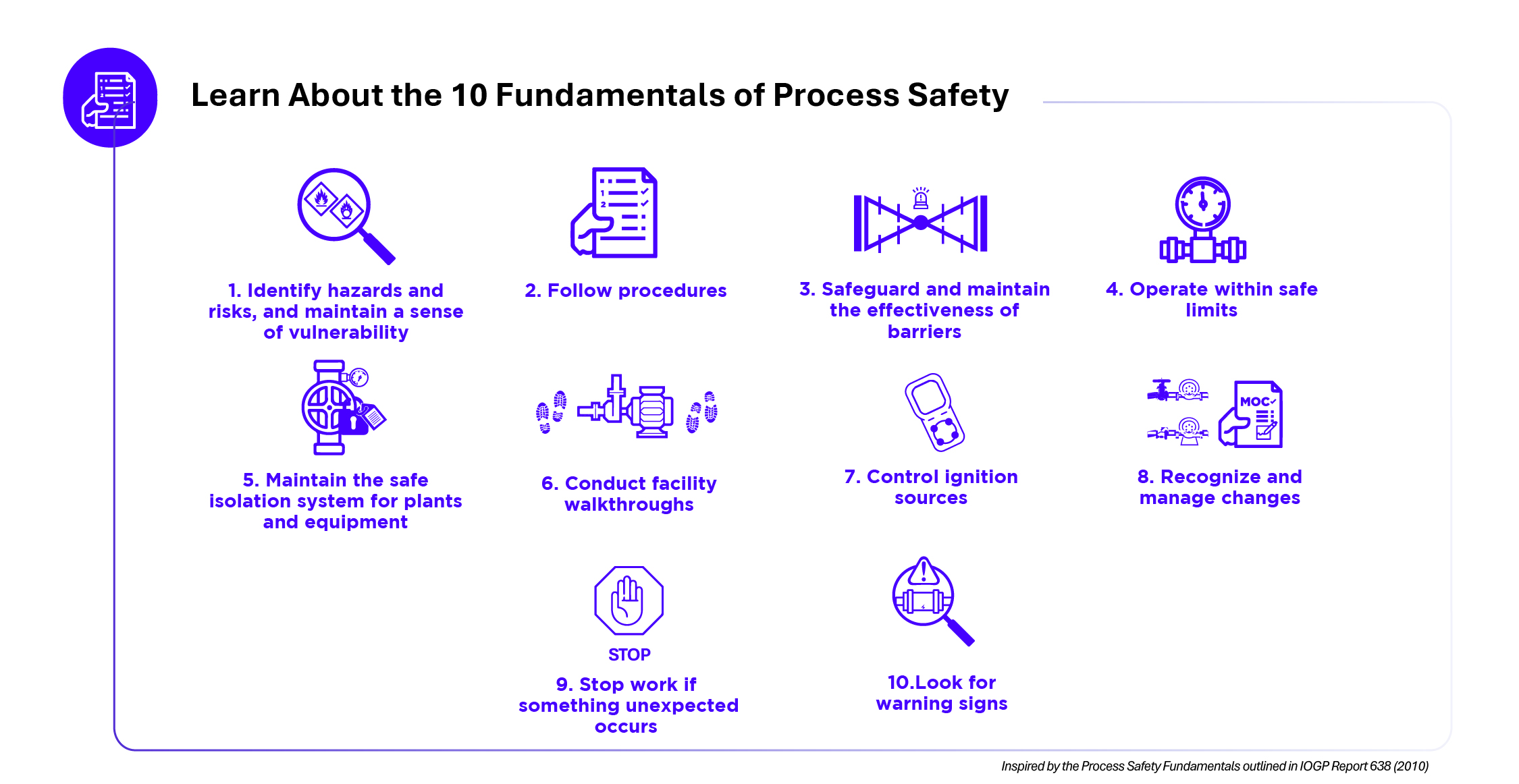
Recently, Ecopetrol incorporated the 10 Process Safety Fundamentals, which reinforce safety in the performance of activities and complement the Rules that Save Lives. These fundamentals are basic behaviors that guide our way of working and help us uphold our cultural principle: Life First. They are a tool for preventing incidents that could affect our employees, communities, and the environment during the development of our operations.
Every day we operate in facilities that handle hazardous substances; however, with good administrative, engineering, and operational practices, we offer the country fair energy for all.
Our 10 Process Safety Fundamentals are:
Figure 1
10 Process Safety Fundamentals
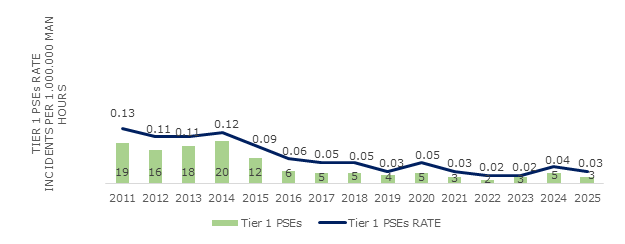
Historical evolution of the PSE T1 indicator
By enhancing process safety management, Ecopetrol has shown a positive performance trend, as reflected in the historical results of the Tier 1 Process Safety Event (PSE T1) indicator, following the practices suggested by RP API 754 standards, as shown below:
Figure 2
Historical Performance PSE T1 Ecopetrol
Comprehensive emergency management
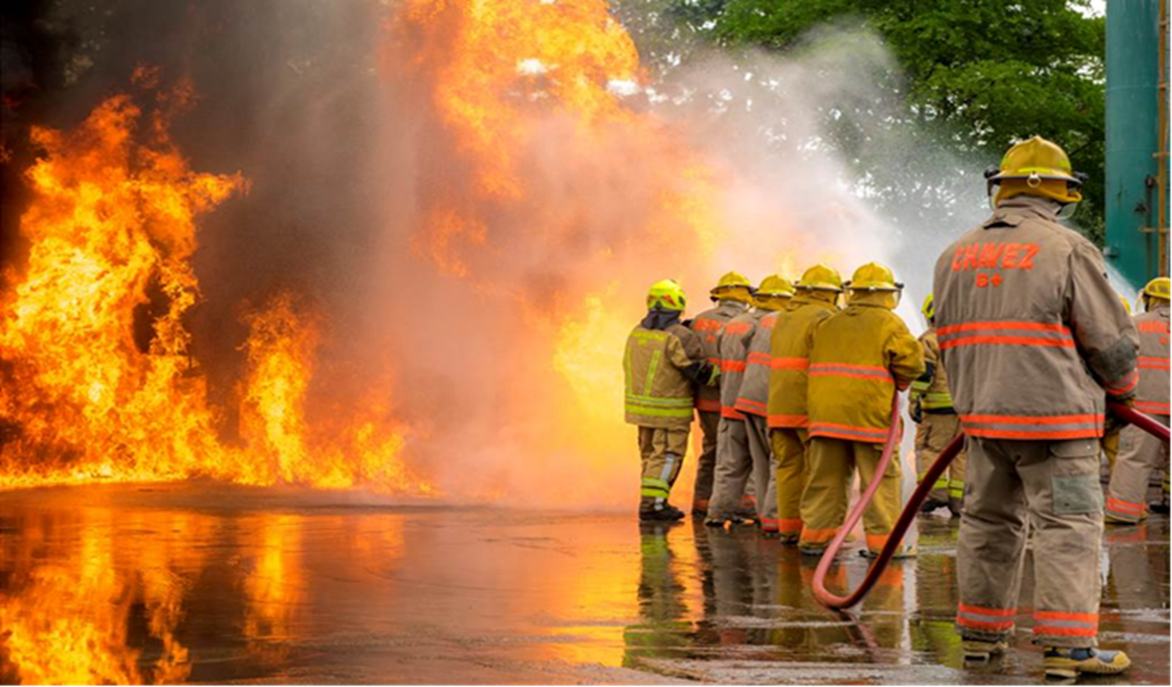
To protect people, the environment, and assets and minimize damage when a potential risk materializes, Ecopetrol carries out comprehensive emergency management using a 3-phase approach: preparedness, response, and recovery, based on the results of the risk analysis of industrial and non-industrial facilities.
Figure 3
Emergency Preparedness and Response
To ensure prompt response and recovery, Ecopetrol has implemented Emergency and Contingency Plans (ECPs) and guarantees that resources are allocated and prepared according to current national laws, regulatory standards, and best practices. These plans are approved by the National Environmental Licensing Authority (ANLA) and are aligned with municipal emergency response strategies and risk management plans in the territories where we operate.
To guarantee sufficient preparation before implementation, each Ecopetrol area documents and updates its ECPs annually. This involves systematically incorporating new information or adjusting existing data, coordinating with internal decision-making bodies, support entities, and external authorities. The ECPs are then communicated to employees and stakeholders and validated through simulations and scheduled drills.
Likewise, Ecopetrol plans and executes emergency response using the Incident Command System, a model of command, control, resource management, and common decision-making, and has trained employees to respond to emergencies that may arise, forming response brigades.

