

Primero la vida
Actions
Results
Actions
Results
Apr 21, 2026
Waste generation and Management

Integrated waste management is a key component of the actions implemented under the framework of operational excellence, supporting the environmental strategy and the Circular Economy model of the Ecopetrol Group. All initiatives are carried out in compliance with national regulations and Ecopetrol S.A.’s internal procedures.
Ecopetrol has developed a material and waste roadmap to guide its transition toward a Circular Economy, recognizing it as a strategic enabler to close material and waste loops. This roadmap includes specific targets for waste reduction and reuse, enabling the measurement and enhancement of circularity performance.
From an operational excellence perspective, the company is implementing comprehensive waste management actions focused on the adoption, reuse, and treatment of generated waste, with the goal of minimizing final disposal in sanitary landfills. These efforts are aligned with our long-term objective: “Progressive reduction of waste sent to final disposal by 2040”and support our broader business ambition within the circularity framework.
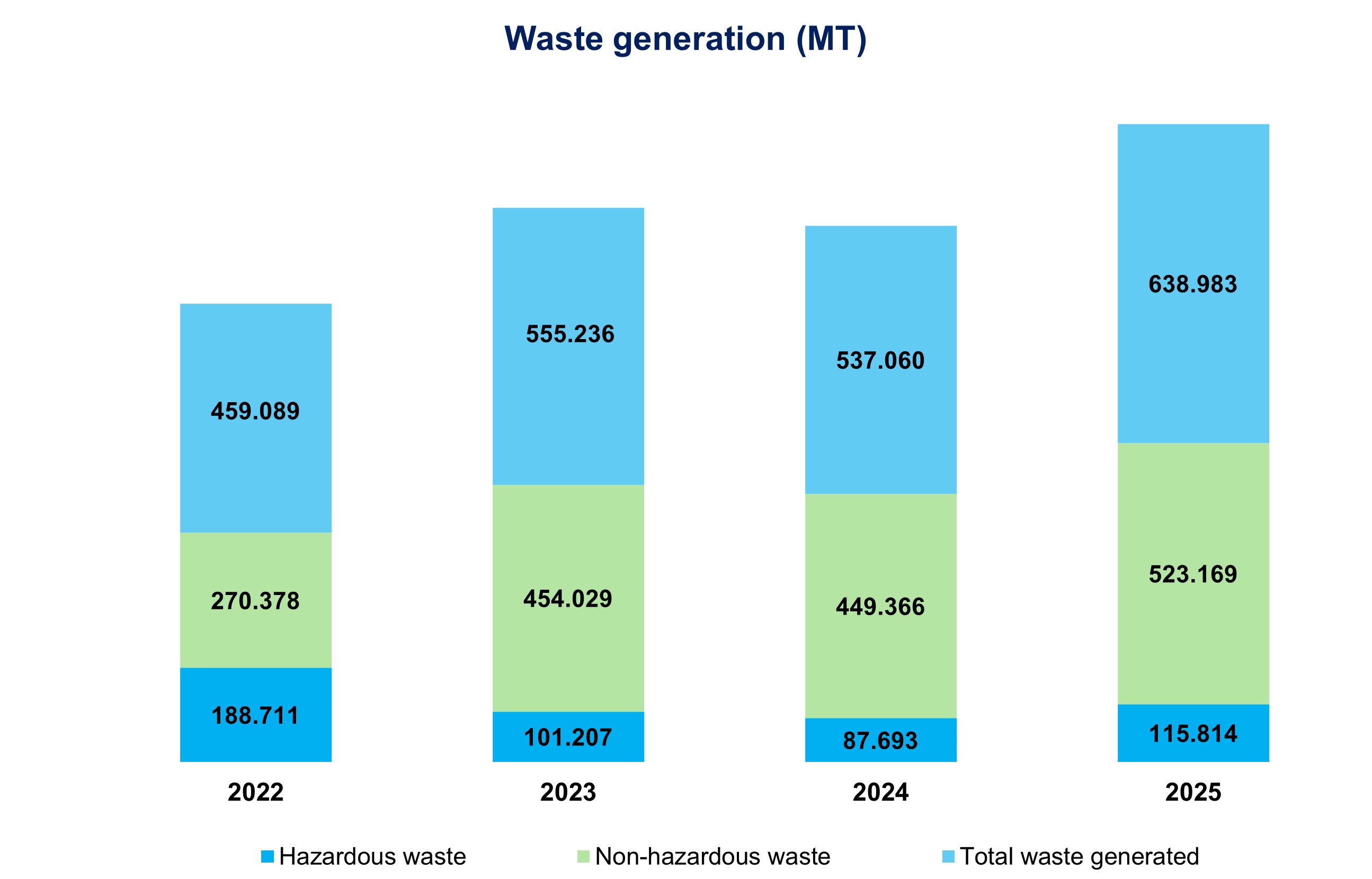
Source: Data was obtained from SAP-Waste Management (SAP-WA) for the period 2022. For 2023-2025, the data is extracted from MARS-E tool.
In 2025, a total of 638,983 MT of waste were generated, of which 115,814 MT (18%) corresponded to hazardous waste and 523,169 MT (82%) to non-hazardous waste, representing a 19% increase compared to 2024. Non-hazardous waste generation increased by 16%, mainly due to higher activity levels related to the construction of facilities, road maintenance, and decommissioning and abandonment campaigns, as well as an increased number of drilling campaigns, with an additional 24 wells drilled in 2025.
Hazardous waste generation increased by 32% compared to 2024. This increase was primarily associated with the management of hydrocarbon-contaminated soils and oily sludges. During 2025, operational incidents occurred that resulted in increased soil impacts, leading to higher volumes of waste managed. Additionally, increased volumes handled in the treatment of produced water led to higher generations of oily sludges in certain operating areas.
The hazardous waste generated, listed from highest to lowest volume, were oily sludges (69,141 MT), hydrocarbon-contaminated soils (26,480 MT), and oil-based drill cuttings (6,494 MT).
Regarding the total volume of non-hazardous waste* generated, the most significant waste streams were construction and demolition waste (CDW) with 323,384 MT, water-based drill cuttings with 150,615 MT, and metal scrap with 22,313 MT.
*As of December 31, 2025, Ecopetrol had 4,224 MT of water-based drill cuttings temporarily stored at the Cantagallo field facilities. Updates on the management and treatment of this waste will be included in the 2026 Integrated Management Report.
Information related to waste management is available through the MARS‑E tool, which enables tracking of the quantities generated by each waste stream.
Note: Waste generation data for 2025 does not include waste resulting from the response to incidents attributable to third parties.
Waste Normalization
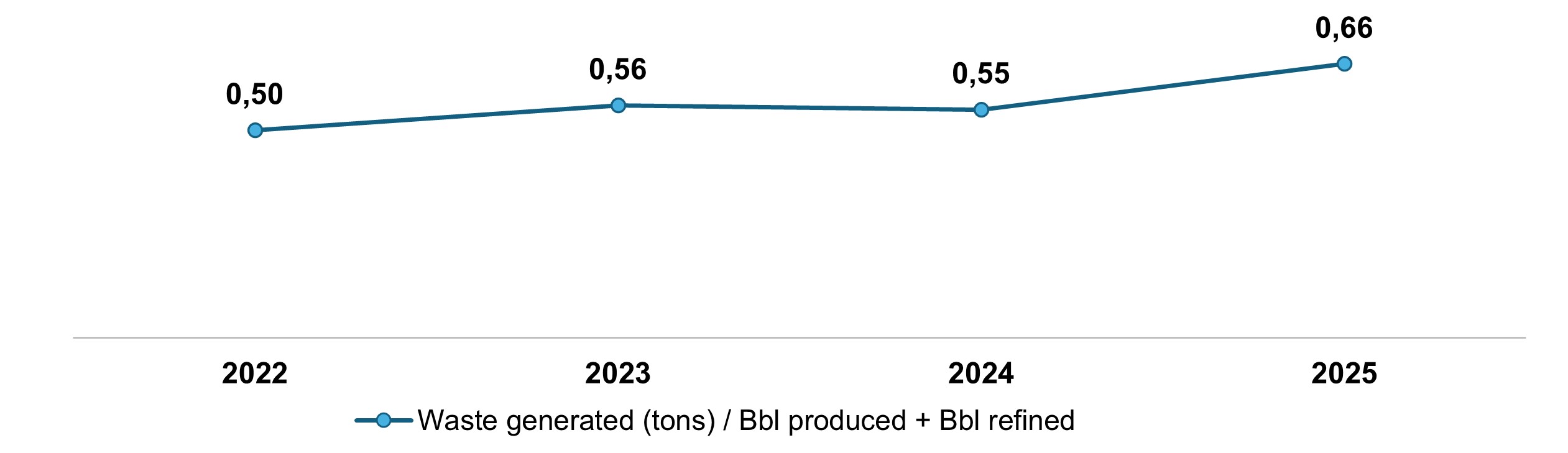
Over the past four years, total waste generation showed an increasing trend; however, a 2% reduction was achieved in 2024. In 2025, waste generation increased again, as a result of higher operational activity levels associated with production, maintenance, construction, and decommissioning processes.
Waste intensity, measured as tons of waste generated per barrel of oil produced and refined, increased between 2022 and 2023, decreased in 2024 in line with the reduction in total waste generated, and rose again in 2025, reaching 0.66 tons per barrel, as reflected in the normalization indicator.
It is important to note that waste generation is not exclusively associated with production and refining activities. Maintenance activities, construction and demolition of facilities, and other operational campaigns significantly influence total waste volumes and contribute to fluctuations in the intensity metric.
Although the increase in total waste generation in 2025, the proportion of waste recovered and reutilized increased in relative terms, resulting in a progressive reduction in the percentage of waste sent to final disposal. This shift reflects sustained efforts to prioritize waste recovery and circular economy practices.
Overall, the performance observed highlights ongoing improvements in waste management efficiency and recovery processes, reinforcing Ecopetrol’s commitment to SosTECnibilidad, responsible resource management, and continuous improvement across its operations.
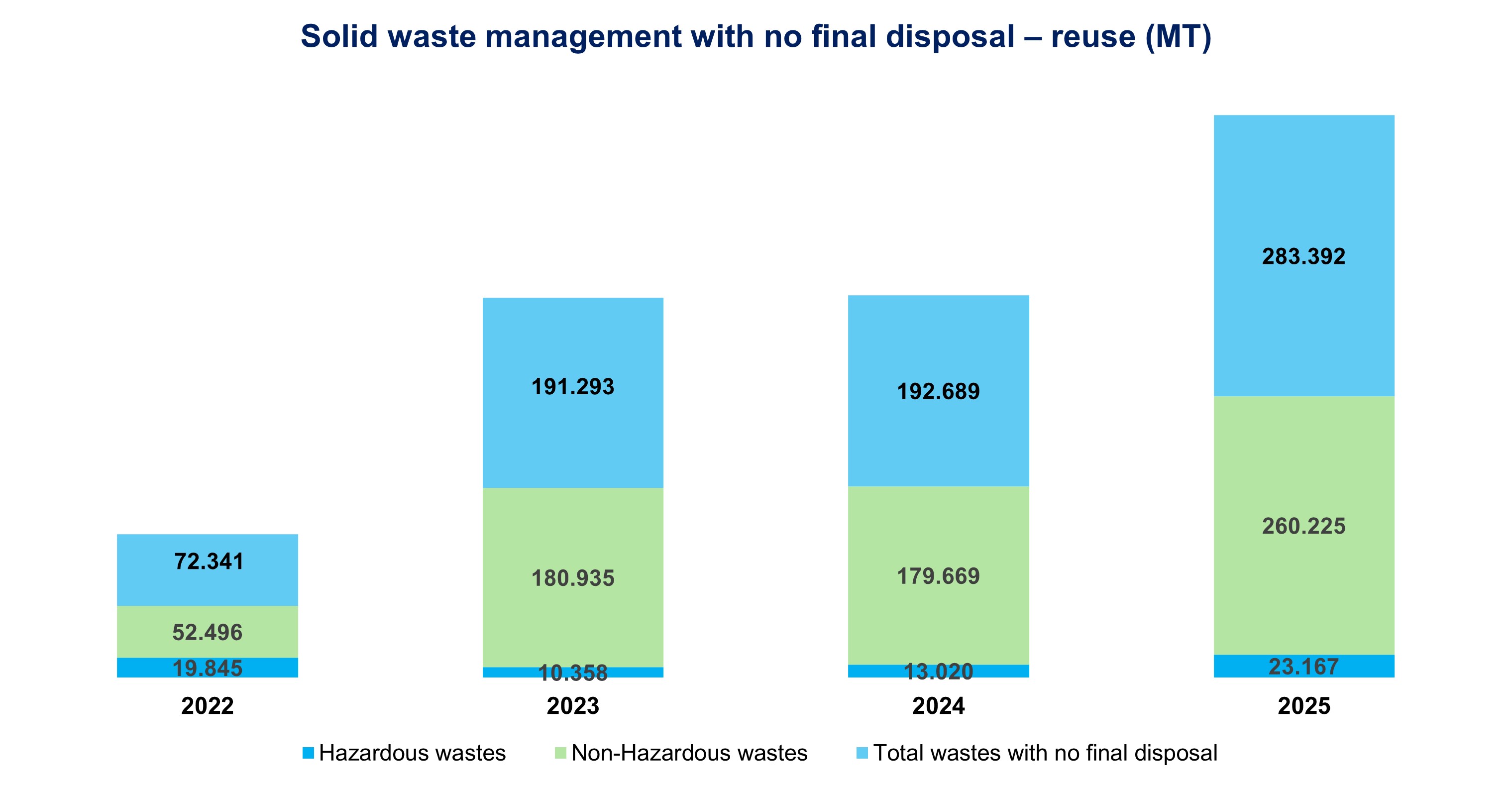
Source: Data was obtained from SAP-Waste Management (SAP-WA) for the period 2022. For 2023-2025, the data is extracted from MARS-E tool.
In 2025, the overall waste recovery rate reached 44%, the highest rate in the Company’s history, exceeding the 36% achieved in 2024.
The recovery rate for hazardous waste not destined for final disposal reached 20%, compared to 15% in 2024. This increase was primarily driven by the management of oily sludges and hydrocarbon-contaminated soils, which were recovered through co-processing in cement kilns; an initiative developed within the downstream segment. Additionally, internal recovery of 6,462 MT of used lubricating oils was achieved through their reuse in fluid treatment systems in production and refining areas.
For non-hazardous waste, the recovery rate increased to 50%, compared to 40% in 2024. This improvement was mainly attributable to: The recovery of 193,368 MT (60%) of construction and demolition waste (CDW), used in road maintenance activities and the construction of civil works; The recovery of 30,177 MT (20%) of water-based drilling cuttings, used in the construction of platforms and civil works; and; The recovery of 22,313 MT (99%) of scrap metal, reintegrated into the steel production industry. Additional initiatives enabled the recovery of 2,849 MT of organic waste through composting and silage processes, generating fertilizers and other by-products for internal use and distribution to stakeholders.
Furthermore, waste streams such as plastics, glass, paper, and cardboard reached a 98% recovery rate, through their delivery to individuals and organizations specialized in waste recovery activities.
The information reported corresponds to records provided by contractor companies responsible for the execution of these activities.
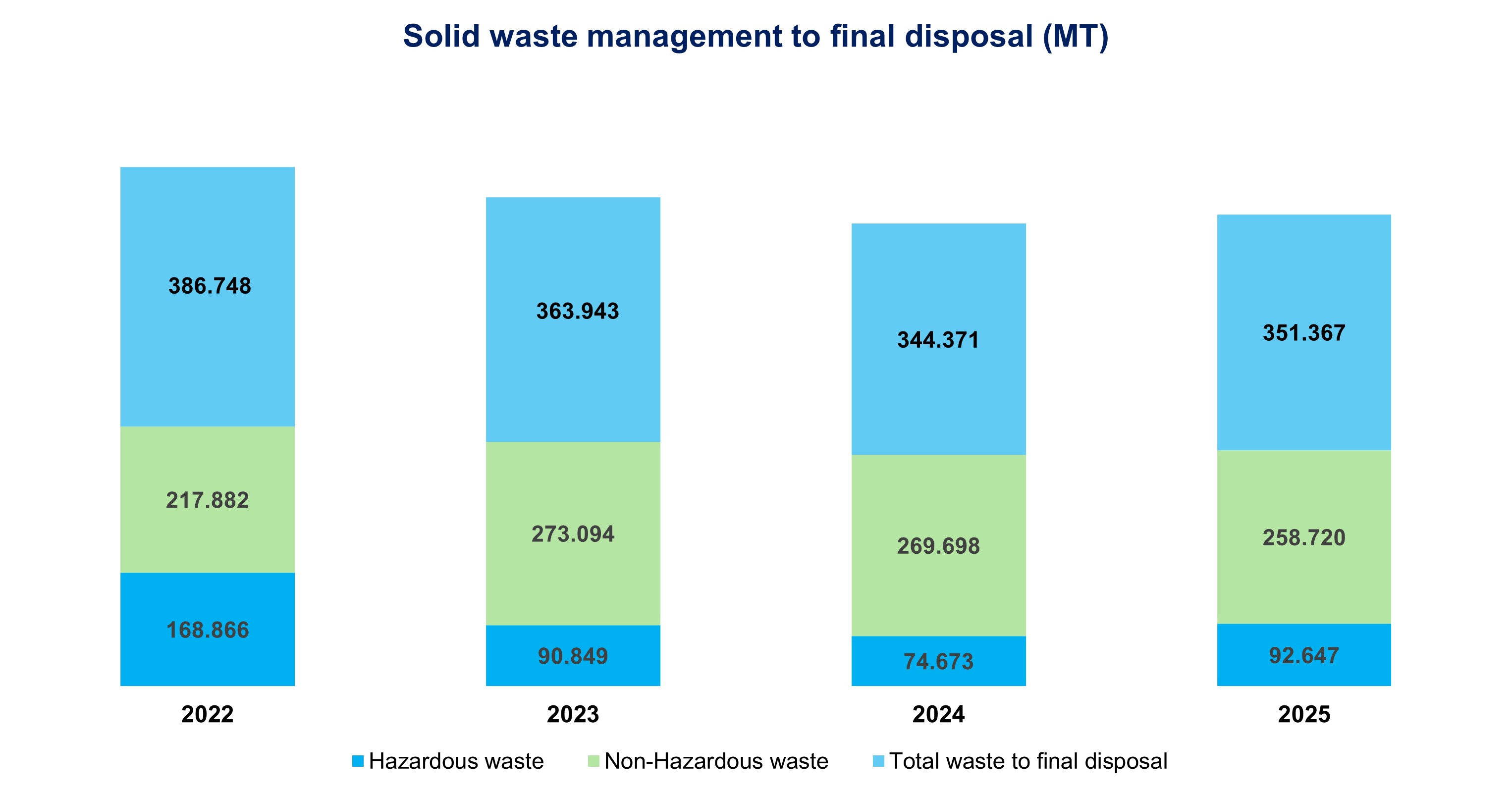
Source: Data was obtained from SAP-Waste Management (SAP-WA) for the period 2022. For 2023-2025, the data is extracted from MARS-E tool.
In accordance with the provisions established in the Integrated Waste Management Guideline, the waste management process begins with an initial assessment to determine whether the waste is suitable for reduction and/or recovery. When, due to its physicochemical composition or the lack of available treatment options in the market, recovery is not feasible, the waste is sent for elimination or final disposal, in compliance with applicable environmental regulations.
During 2025, Ecopetrol eliminated a total of 351,367 MT of waste, of which 92,647 MT (26%) corresponded to hazardous waste and 258,720 MT (74%) to non-hazardous waste.
In 2025 the main waste streams sent for elimination were:
- Construction and demolition waste (CDW)
- Water-based drilling cuttings
- Oily sludges
- Hydrocarbon-contaminated soils
Construction and demolition waste (CDW) and water-based drilling cuttings were mainly disposed of in authorized excavation material disposal areas, as well as in internal and external disposal sites, all of which hold the corresponding environmental authorizations.
The data also include waste streams such as oily sludges and hydrocarbon-contaminated soils, which accounted for approximately 83% of the total volume of hazardous waste generated by the Company in 2025. Of this volume, 83% was treated through bioremediation processes. It is important to highlight that bioremediation activities are mainly carried out at third-party facilities that hold valid environmental licenses authorizing this type of activity.
Hazardous waste destined for elimination, such as acidic sludges and hydrocarbon-impregnated materials, were disposed in security landfills or secure disposal cells, in line with technical and regulatory requirements.
The information reported for waste sent to elimination, including oily sludges, hydrocarbon-contaminated soils, hydrocarbon-impregnated materials, catalysts, among others, is collected through records and reports provided by contractor companies performing activities within the Company’s industrial facilities.
Percentaje of waste sent to final disposal
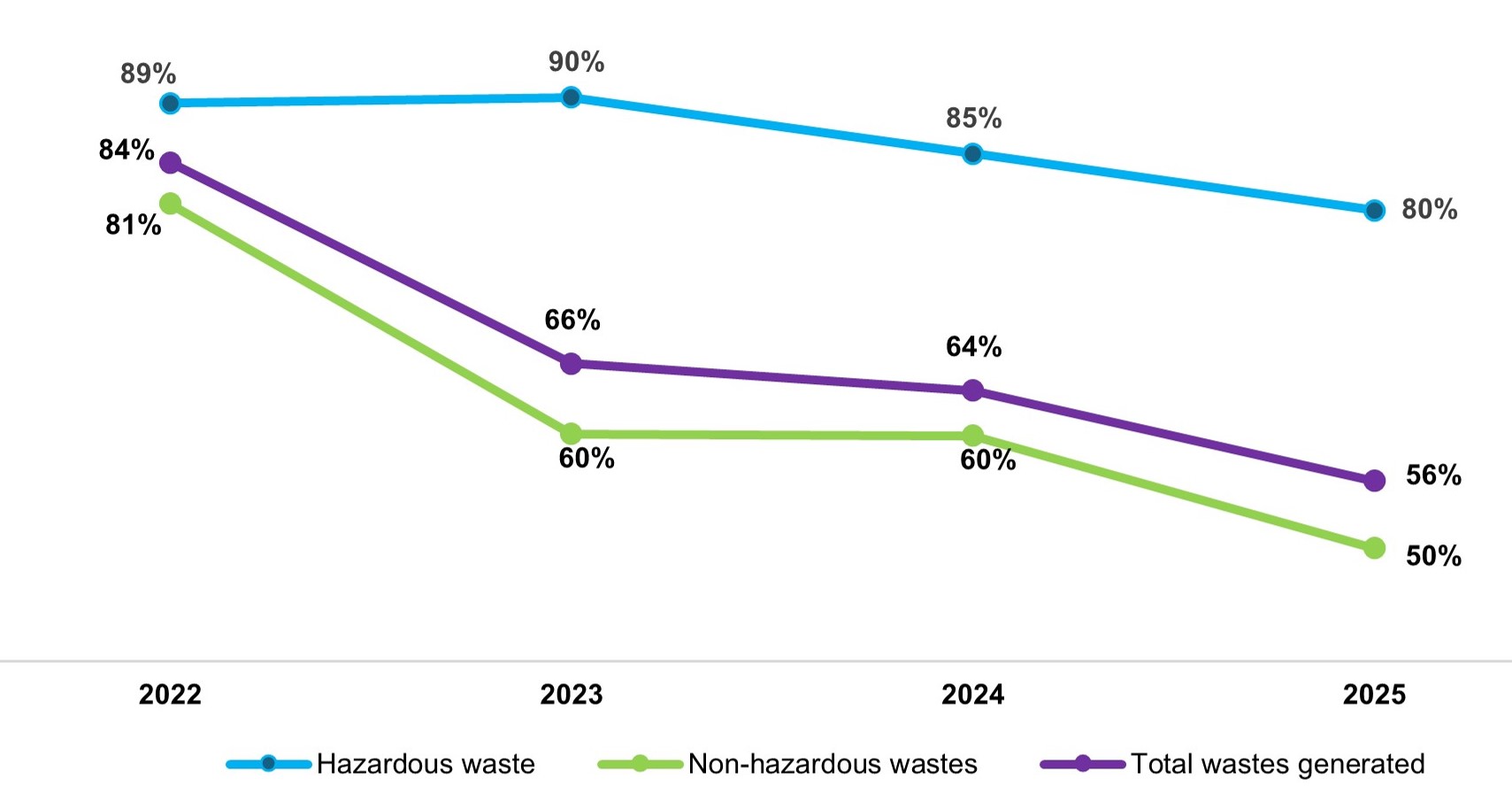
In recent years, Ecopetrol has steadily reduced the amount of waste sent to final disposal, as part of its commitment to a more responsible and sustainable environmental management approach.
In 2025, 56% of the total waste generated was sent for elimination, representing a significant reduction compared to previous years. This progress reflects the Company’s efforts to identify better management alternatives, such as waste recovery and treatment, aimed at reducing environmental impacts.
One of the most notable achievements is observed in non-hazardous waste management. The proportion of non-hazardous waste sent to final disposal decreased from 81% in 2022 to 50% in 2025, showing a shift toward management options beyond elimination, with more non-hazardous waste being reused or valorized.
In the case of hazardous waste, although its management requires more specialized processes, improvements have also been achieved. Between 2022 and 2025, the percentage of hazardous waste sent to final disposal decreased from 89% to 80%, reflecting gradual progress in the implementation of safe treatment alternatives.
Overall, these results demonstrate a positive shift in Ecopetrol’s waste management practices, prioritizing the reduction of final disposal and advancing towards more sustainable approaches aligned with the principles of the circular economy.
Finally, all waste management activities are conducted in compliance with applicable regulations and legislation, as well as with the highest industry standards and best practices. Compliance is verified through a monitoring program that oversees waste management conditions at both internal and external facilities.
Research and Development
During 2025, the Colombian Petroleum and Energy Transition Institute (ICPET) executed more than COP 4,100 million in research and development projects focused on the utilization and valorization of industrial waste. Notable activities included the evaluation of spent catalysts for sale and metal recovery; the assessment of valorization options for spent sulfuric acid and cresylic naphthenic acids from refining processes; the consolidation of a comprehensive analysis of the generation of oily production sludges as a bituminous material for use as an asphalt binder; and the evaluation of thermal transformation products and recycled plastics for refining processes.
Skills improvement
During 2025, 198 employees received training in Integrated Waste Management (IWM) through Ecopetrol University (Uguana) with a total of 2 hours dedicated to this training. The historical report of this formation in recent years is:

Integrated Waste Management (IWM)
|
Year |
2022 |
2023 |
2024 |
2025 |
|
Trained employees |
128 |
862 |
101 |
198 |

